For the past few days, Straits Times has been going around asking for comments on the Electoral Boundaries Report. I obliged and talked to one of the Straits Times reporters on Friday night.
My comments were reported the next day. I wasn’t very happy about the incomplete quotations from my reply but just shake my head and carry on with my life. When one does not have any expectation of the local reporters, one wouldn’t have much disappointment at all.
However, people around me started to call me up and "complain". First, I have used the phrase "George Yeo is a respectable opponent and as a senior minister, it would look very bad for him if the whole Aljunied GRC disappears. It will make PAP looks very kiasu…." Well, the reported version doesn’t look good but never mind about that.
The more disturbing comment from my friends was that the ST reporter or editor doesn’t respect me at all. For all other alternative parties’ council members, they were reported with their designations clearly stated beside their name. But why would I only be a "WP member" only when I am not merely a CEC member but also the assistant organizing secretary of Workers’ Party?
In actual fact, this is not the only time when the ST show disrespect of Workers’ Party members. Back in 2001, though Dr. Poh Lee Guan has a phd, they only put up "Poh Lee Guan" (didn’t even have a Mr.!) while his opponent was fully named as "Assoc. Prof. Ho Peng Kee"!
For me, personally I don’t even care about such lopsided treatment though I have noticed for the past few reports, ST has been deliberately "discriminated" me in their reporting. The last report in ST on the Singapore Political Forum held in NUS, also did the same thing, using "WP member Goh Meng Seng". I just laugh at such reporting.
But my wife, as an ex-producer in TCS (the pre-Media Corp era), told me that it is totally unprofessional for journalist or editor to do such things. I must exert myself on these reporters and editors to get my point through, for the good of my party. They could do such thing to me, they could also do the same to my other comrades.
Thus when the same reporter called me up on Saturday, I reminded him about my designation. He claims that such title is a bit "long" but the point is, when ST could assign similarly long designation on other alternative parties’ members or even PAP members why should he discriminate me or my other comrades? I dare them to address SM Goh Chok Tong as "PAP member Goh Chok Tong"!
When I met the same reporter on Sunday in East Coast GRC, I just reminded him that if he and his editor do the same thing again, he should be prepared for a boycott or total ignore on ST reporters during the elections. Well at least for today’s ST report on our activity in East Coast GRC, Mr. Chia Tilik was fully mentioned as assistant organizing secretary of WP, not just "WP member".
I would say that reporters are just human beings. They need to get a good story, good comments and quotes to write on. They earn a living by doing so and we fully understand that they are just doing their job. But when the reporters or editors become totally unreasonable, like the January report in New Paper on our manifesto launch, we will have no choice but to ignore them in future, at least in the coming general elections. I would make sure that New Paper will not get any news or extraordinary coverage on WP in the coming elections after the episode on our manifesto launch. They have practically destroyed the basic trust built up between us.
My point is that reporters and editors must also understand we are also just human beings. If they want to play punk or use unfair tactics against us, then they deserve the general perception that alternative parties’ sympathizers and supporters cast upon them. They will lose whatever little credibility they have tried so hard to rebuild in recent months or years. And we will definitely deprive them their daily breads, news. With the advancement of technology, the availability of alternative media like internet, forums and blogs, we will have other ways to get our messages across to the voters.
Some reporters have lamented that SDP seems to shut them off totally. I told them it is pure karma; imagine if they were in SDP and experienced the type of media reporting done on them during 2001, would they do the same, shun the local media?
Thus my advice to reporters and journalists of local media, don’t try to play punk with totally slanted reporting on alternative parties. Karma will bounce back on you. We do not expect you to be "PRO" non-PAP parties, but at least report fairly. Else you will risk suffering like New Paper or the response from SDP.
Goh Meng Seng
Monday, March 06, 2006


Friday, March 03, 2006
Political Rally Speech Training
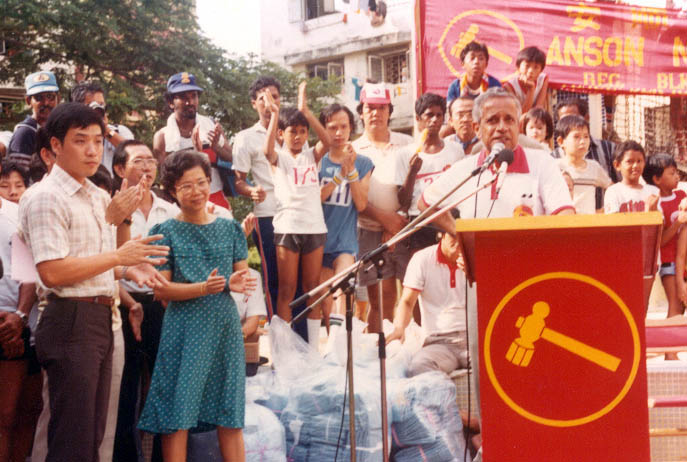
Workers' Party has initiated a few Pre-General Elections training sessions for both its members at large as well as candidates in specific.
We have conducted an in house GE seminar last year, open to all our members. This is to bridge the gap of knowledge and experiences between veterans and new members in running an election campaign effectively.
Following the main GE seminar held last year, specific closed door seminar and training have been conducted for its potential candidates. One of these important training involves political rally speech writing cum speech delivery. I would say that we learn from past experiences as well as PAP MPs who may well have very good "paper qualifications" but when it comes to delivery of rally speeches, they failed to "move" the ground.
Many people assume that giving political speeches is just like any other speeches we used to give in our professional working environment. This is a very dangerous presumption. One may give effective board room speeches, delivery good lectures to a lecture room full of students or even a put up a persuasive legal argument as a lawyer in a courtroom, but when it comes to rally speeches, it is totally a different ball game.
We could adapt an off the shelf standard menu on speech writing and speech delivery but it seems that alot of modifications must be made. Rally speeches should be written differently with different emphasis. A political rally speech is not a lecture, trying to teach something "NEW" to the audience. A political rally speech is not a business proposal that is to be delivered to a small number of audience. A political rally speech is definitely not meant to be delivered to an audience which we expect them to pass judgement. Writing a political rally speech needs specific niche skills but least of bombastic wordings. The potential audience may come from many different background with different intellects. The most difficult part of writing a good political rally speech is to use the lowest denomination of language vocabulary to win the hearts and minds of the people that have different levels of intellect.
The delivery of political rally speeches is totally different from "reading" a speech. One should deliver but not read a speech. And to deliver a speech nicely in a wide open space fill with thousands of audience needs specific skills. How not to sound soft but yet not "fierce"; how to speak clearly and slowly and yet not to make your listeners bored....
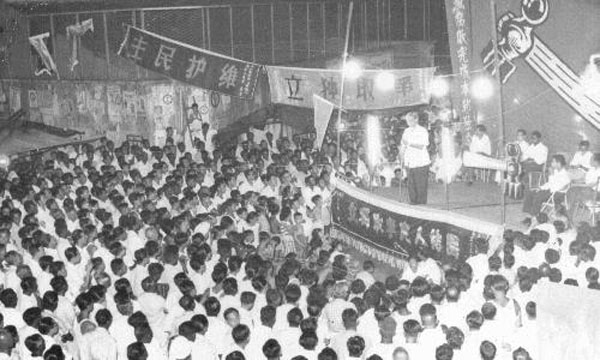
Practice makes perfect. Lots and lots of practices are needed to prepare a candidate adequately for the final D day. Besides practices, we also need to watch more political rally speeches delivered by others, especially from those veterans who have given wonderful speeches back in the 1950s and 1960s where intense political competition has nurtured a generation of good speakers.
The recent memorial TV program featuring the late Rajartnam is a very good learning tool. People of that time deliver wonderful speeches with a natural flare. If we make a comparison between the present political leaders' delivery of rally speeches as compared to those veterans back in the 1950s and 1960s, we could see distinctively the wide gap of quality. This is mainly due to the lack of political competition.
I believe that if we are not born a good speaker, we could learn up to 90% of the skills of a good speaker. Watching how good speakers deliver their speeches is an important learning process. Getting into the REAL environment whereby the good speakers give their speeches is a great experience for learning. In today's context, we may not get too many of such opportunities but we could get it overseas. I have deliberately flew to Taiwan during its last Presidential Election period, just to observe and learn from the Taiwanese speakers. The atmosphere and how the speakers move the crowd is really an eye opening experience.
To win an uphill battle against a giant opponent, it will take more than consistent ground work. Personal development in various aspects must be made progressively. Writing good political speeches and deliver them effectively is one very important aspect that we must spend more time on.
Goh Meng Seng
Tuesday, February 28, 2006
Election site allocation --- Letter to Zaobao
The following is a letter which I wrote to the local Chinese daily, Zaobao on 28 Jan 2006.
This letter is about the way the authority allocate election rally sites during the GE campaign period.
This letter is about the way the authority allocate election rally sites during the GE campaign period.
大 选 群 众 大 会 地 点 申 请 方 式 应 予 改 善
贵 报 于 1 月 27 日 刊 登 内 政 部 公 共 事 务 司 长 赵 碧 云 致 函 《 早 报 交 流 版 》 题 为 《 “ 申 请 不 到 大 会 地 点 ” 的 指 责 不 实 》 一 文 是 对 蔡 深 江 先 生 早 前 发 表 的 评 论 作 出 回 应。 由 于 蔡 先 生 一 文 是 就 后 港 区 议 员 、本 党 秘 书 长 刘 程 强 先 生 在 国 会 提 出 有 关 课 题 所 作 的 评 论 , 现 在 却 被 内 政 部 指 责 为 没 有 弄 清 事 实 , 因 此 本 党 必 须 依 据 我 们 的 经 验 作 出 反 驳 。
第 一 , 内 政 部 列 举 了 群 众 大 会 的 场 地 可 供 三 个 时 段 给 政 党 举 行 集 会 , 以 证 明 现 有 的 制 度 能 提 供 足 够 场 地 供 政 党 申 请 。 但 是 实 际 上 , 由 于 上 午 与 中 午 的 时 段 天 气 炎 热 , 加 上 多 数 人 都 在 上 班 , 因 此 根 本 不 适 合 集 会 ,最 后 只 剩 下 晚 间 的 时 段 才 适 合 举 行 群 众 大 会 。 因 此 , 内 政 部 以 场 地 共 有 三 个 时 段 可 供 租 用 来 说 明 群 众 大 会 地 点 足 够 , 是 无 法 让 人 信 服 的 。
第 二 , 内 政 部 指 出 在 2001 年 的 大 选 投 票 前 夕 , 全 部 17个 地 点 中 , 只 有 10 个 地 点 被 使 用 , 因 此 举 行 群 众 大 会 的 场 地 是 足 够 的 。 另 外 , 内 政 部 也 以 行 动 党 在 为 期 8 天 的 竞 选 期 间 , 只 在 后 港 和 义 顺 东 分 别 举 行 了 一 场 和 三 场 群 众 大 会 为 例 , 说 明 行 动 党 并 没 有 占 据 全 部 的 场 地, 因 此 “先 到 先 得 ” 的 配 给 方 法 是 公 平 的 。 然 而 ,行 动 党 却 是 在 投 票 前 夕 同 时 在 后 港 和 义 顺 东 举 行 群 众 大 会 , 使 工 人 党 无 法 在 当 天 申 请 到 任 何 场 地 。 值 得 注 意 的 是 , 在 现 有 的 条 例 下 , 各 政 党 并 不 能 在 非 参 选 的 选 区 举 行 群 众 大 会 , 所 以 纵 使 有 其 他 选 区 的 场 地 未 被 使 用 , 对 我 党 也 无 补 于 事 。 显 然 , 这 种 配 给 方 法 已 造 成 工 人 党 在 上 届 大 选 投 票 日 前 夕 的 最 后 关 键 时 刻 , 无 法 通 过 群 众 大 会 对 行 动 党 的 攻 击 作 出 回 应, 以 及 直 接 向 选 民 作 出 最 后 重 要 的 演 讲 。 这 就 是 问 题 的 症 结 所 在 。因 此 , 内 政 部 所 列 举 的 数 据 并 不 能 确 实 反 映 政 党 所 面 对 的 现 实 境 况 。
第 三 , 警 方“ 秉 公 处 理 , 无 私 无 惧 ”的 精 神 无 疑 是 值 得 赞 扬 的 。 然 而 , 他 们 所 采 用 “ 先 到 先 得 ”的 方 式 尽 管 透 明 ,却 不 利 于 资 源 不 足 的 政 党 , 这 也 是 刘 程 强 和 蔡 深 江 先 生 所 关 注 及 强 调 的 。为 何 内 政 部 避 重 就 轻 , 对 此 观 点 完 全 没 有 回 应 呢 ?
第 四 ,蔡 先 生 也 提 及 在 讲 求 效 率 的 新 加 坡 , 警 方 现 今 为 何 还 要 坚 持 排 队 制 度 而 不 考 虑 采 用 诸 如 电 子 申 请 等 方 式 呢 ?即 使 不 采 用 电 子 方 式 , 为 何 警 方 还 是 认 为 排 队 制 度 比 起 蔡 先 生 所 提 议 的 抽 签 或 轮 流 制 来 得 透 明 合 理 ?
最 后 我 们 质 疑 的 是 , 为 何 警 方 不 在 每 个 竞 选 的 区 内 提 供 至 少 两 个 举 行 群 众 大 会 的 地 点 , 并 限 定 参 选 的 政 党 或 独 立 人 士 只 能 在 各 个 选 区 的 每 个 时 段 申 请 其 中 一 个 地 点 呢 ? 这 样 的 安 排 将 能 确 保 在 野 党 与 执 政 党 都 有 平 等 的 机 会 , 在 同 一 个 时 段 租 用 到 群 众 大 会 的 场 地 。
我 们 希 望 警 方 能 看 清 和 顾 及 全 局 ,从 选 民 的 角 度 来 看 问 题 , 修 复 现 有 制 度 的 不 足 之 处 , 让 选 民 有 机 会 充 分 听 取 各 参 选 政 党 的 理 念 和 政 纲 , 以 掌 握 足 够 的 讯 息 来 作 出 明 智 的 选 择 。 这 应 该 是 警 方 作 为 公 共 服 务 机 构 的 责 任 和 义 务 。
工 人 党 助 理 组 织 秘 书
吴 明 盛 上
Thursday, February 09, 2006
Time Bombs, Poisons & Election Strategy
Time Bombs, Poisons & Election Strategy
I shall not keep our reporter friends in suspense and I will write my thoughts on the recent "rare" sensational political sparks created by PAP and WP.
However, I am not going to debate on the "time bombs" or "poisons" as my party leaders, Mr. Low TK, Ms. Sylvia Lim as well as Mr. Tan Wui-Hua, have made our party stand very clear in the past weeks' cross fire. This may just disappoint my reporter friends. ;)
I am going to talk about the tactical and strategic angles that PAP is taking at the moment. I have postponed this article just to make sure that PAP's first wave of assaults is finished. There are a few multiple aims of PAP's first wave of assaults:
1) Use sensational phrases to dominate citizens' attention without the need to go into detailed explanation of the issues.
2) Try to dominate and set the main agenda for the coming elections.
3) To lure WP into the racial debate.
4) Discredit WP by using words like "irresponsible", "dangerous" etc.
5) To draw discord among WP's rank and file (especially the leadership), trying to break the party's unity before it could go to battle.
On the night where PAP ministers first fired at WP Manifesto, I received a "nervous" call from a friend asking, "Hey, what happened? What time bomb you have?" The impact of such sensational phrases used by PAP is pretty great in its initial period where the fine details of the issues are buried by "Time Bombs". There isn't any time for people to think and digest at all when the bombastic phrase "Time Bombs" is used. I think up till now, for those who do not bother to find out more about the issues or read our Manifesto in totality, will be captivated by such sensational words.
It is obvious from the PAP's publicized messages that they want to set the election agenda by narrowing it to the 4 issues. It saves them the trouble of guessing what issues we will bring up in the coming elections as well as diverting the real issues at hand. Strategically speaking, PAP is trying to choose the battleground it thought "BEST" suits itself.
More importantly, PAP tries to lure us into the racial debate. PAP has so far dominated each and every social political discourse on issues of race. They say racial issues are sensitive issues and it seems that PAP believes only it could put up the "RIGHT" views on these issues. Anybody who tries to bring up anything that contradict or challenge PAP's stand on local race issues or policies that concern racial nature openly, they will zoom in and all sorts of labels will be handled out immediately. Labels like Malay chauvinist, Chinese chauvinist etc, will be immediately tagged on those who don't agree with PAP's stand. The playing field is never leveled. However, it is precisely this "I know best" attitude that puts off many younger voters at the end of the day.
Obviously the main intention is to discredit WP as a credible alternative party as against PAP. But how successful is PAP in making such inferences? Asking WP to "modify" or "change" its manifesto is to belittle WP. It is of course an insult to a political party. If we really change our manifesto just because the ruling party is not happy, isn't that a mockery in the making? We are not a sub-structure organization of PAP! And it is an insult to our effort, work and research into all the wide-ranging topics mentioned in the manifesto. My assessment is that PAP has done more harm than good to itself in this short episode. I will explain later but lets look in PAP's most intriguing attempt in trying to break WP's leadership's unity.
PAP has first suggested that Mr. Low is being "misled" by some"?other members". After Mr. Low stood firm on our party's stand, it turns towards Ms. Sylvia Lim and "other individuals" involved in the launch of the manifesto. It is a common tactic of divide and conquer but apparently PAP was misled about the "conflicts" or "disunity" within WP! I have noticed that reporters have been probing about "potential disunity" in our party way back in early 2005. It seems that they are misinformed by some sources that there are disunity within the party leadership! And such misinformation has been impressed upon PAP but I must say it has bad judgement! If there is truly any signs of "disunity", PAP's tactic might have been effective in breaking us up. But PAP has underestimated the leadership of WP.
Diversity in views within a political party and its leadership is very common. What is not common is the system or process that could create consensus among the members. I would say that PAP has underestimated Mr. Low's leadership. They may see Mr. Low as a non-charismatic or non-assertive leader but that?s exactly where his strength lies. The consensus building process is a long and tedious process but at the end of the day, each and everyone involved knows exactly where we stand, why we make such stand.
There are reasons for the relatively rapid growth of WP under Mr. Low Thia Khiang. Many people would expect the frictions experienced by other political party in the process of growth to happen in WP. However it is how we manage such growth that is more important. Mr. Low and the leadership of WP has a strong common convictions, vision and maturity to handle such growth. This is where PAP has failed to understand. In fact, PAP's onslaught has made us more united than ever!
In view of the strength of WP, not only in numbers but also in mental strength and unity, PAP's first wave of assaults have failed miserably. The sensational phrases "Time Bombs" and "Poisons" are used to "stun" both the public as well as WP members in the hope to create doubts in its leadership. However, PAP has underestimated the amount of trust and confidence that we have in WP leadership.
In the eyes of the public, the main battleground lies in the middle ground voters. Those who do not bother to check our stand or manifesto, will believe and vote for PAP anyway. Those who will vote for us, will not be bothered by the "Time Bombs". Only those who are undecided or "vote swingers" in the middle ground will be intrigued to find out more. Besides, the issues chosen are really "controversial" in nature. There are already well established reasoning against the GRC and Elected Presidency while almost every Singaporeans in "contested" wards know how politicized RCs and CCCs. While for the HDB quota, at first sight PAP's reasoning may sound rational but at closer examination, one would find that such reasoning is weak.
Thus so far, responses from coffee shops or internet blogs or forums have not reached the "desirable impact" for PAP. It might have backfired in certain fronts and this is the main reason for the abrupt silence from PAP in pursuing these topics further.
Two main broad objectives have been set for PAP's first salvo but it has achieved little. Ironically, the unintended impact caused was a massive surge of interests in WP manifesto. The public interest was so great that we have decided to put up our manifesto online way before the intended schedule.
I would say that from a tactical and strategic perspective of a political party, PAP has set the right direction but it fails in making due considerations of the situation at hand. First, it miscalculated the strength and unity of WP. Secondly, they have rushed into firing off its salvo without full empathy on the public perception on the issues raised. They thought by using sensational phrases, they could get away from detailed deliberations on the issues at hand. It seems that when WP made its points about RCs and CCCs are over politicized, it strikes a strong resonance with the public at large. As for the GRC and Elected Presidency, I think despite what PAP wants the public to believe, most people from the middle ground understand the issues far better than they thought. PAP will suffer a backlash on their own credibility if they keep insisting that the suggestion of removing these institutions will constitute a "time bomb"!
I think PAP should take their own advise seriously: take your time, no rush, no need to come up with firecrackers in haste, go through our manifesto carefully before you shoot! Apparently they have fallen flat on their first salvo, I expect better fire or "bombs" from them. Finally, I would suggest that they drop the idea of trying to "break" us up. It will just make them look very silly indeed. They are grossly misinformed about WP all this while.
Goh Meng Seng
I shall not keep our reporter friends in suspense and I will write my thoughts on the recent "rare" sensational political sparks created by PAP and WP.
However, I am not going to debate on the "time bombs" or "poisons" as my party leaders, Mr. Low TK, Ms. Sylvia Lim as well as Mr. Tan Wui-Hua, have made our party stand very clear in the past weeks' cross fire. This may just disappoint my reporter friends. ;)
I am going to talk about the tactical and strategic angles that PAP is taking at the moment. I have postponed this article just to make sure that PAP's first wave of assaults is finished. There are a few multiple aims of PAP's first wave of assaults:
1) Use sensational phrases to dominate citizens' attention without the need to go into detailed explanation of the issues.
2) Try to dominate and set the main agenda for the coming elections.
3) To lure WP into the racial debate.
4) Discredit WP by using words like "irresponsible", "dangerous" etc.
5) To draw discord among WP's rank and file (especially the leadership), trying to break the party's unity before it could go to battle.
On the night where PAP ministers first fired at WP Manifesto, I received a "nervous" call from a friend asking, "Hey, what happened? What time bomb you have?" The impact of such sensational phrases used by PAP is pretty great in its initial period where the fine details of the issues are buried by "Time Bombs". There isn't any time for people to think and digest at all when the bombastic phrase "Time Bombs" is used. I think up till now, for those who do not bother to find out more about the issues or read our Manifesto in totality, will be captivated by such sensational words.
It is obvious from the PAP's publicized messages that they want to set the election agenda by narrowing it to the 4 issues. It saves them the trouble of guessing what issues we will bring up in the coming elections as well as diverting the real issues at hand. Strategically speaking, PAP is trying to choose the battleground it thought "BEST" suits itself.
More importantly, PAP tries to lure us into the racial debate. PAP has so far dominated each and every social political discourse on issues of race. They say racial issues are sensitive issues and it seems that PAP believes only it could put up the "RIGHT" views on these issues. Anybody who tries to bring up anything that contradict or challenge PAP's stand on local race issues or policies that concern racial nature openly, they will zoom in and all sorts of labels will be handled out immediately. Labels like Malay chauvinist, Chinese chauvinist etc, will be immediately tagged on those who don't agree with PAP's stand. The playing field is never leveled. However, it is precisely this "I know best" attitude that puts off many younger voters at the end of the day.
Obviously the main intention is to discredit WP as a credible alternative party as against PAP. But how successful is PAP in making such inferences? Asking WP to "modify" or "change" its manifesto is to belittle WP. It is of course an insult to a political party. If we really change our manifesto just because the ruling party is not happy, isn't that a mockery in the making? We are not a sub-structure organization of PAP! And it is an insult to our effort, work and research into all the wide-ranging topics mentioned in the manifesto. My assessment is that PAP has done more harm than good to itself in this short episode. I will explain later but lets look in PAP's most intriguing attempt in trying to break WP's leadership's unity.
PAP has first suggested that Mr. Low is being "misled" by some"?other members". After Mr. Low stood firm on our party's stand, it turns towards Ms. Sylvia Lim and "other individuals" involved in the launch of the manifesto. It is a common tactic of divide and conquer but apparently PAP was misled about the "conflicts" or "disunity" within WP! I have noticed that reporters have been probing about "potential disunity" in our party way back in early 2005. It seems that they are misinformed by some sources that there are disunity within the party leadership! And such misinformation has been impressed upon PAP but I must say it has bad judgement! If there is truly any signs of "disunity", PAP's tactic might have been effective in breaking us up. But PAP has underestimated the leadership of WP.
Diversity in views within a political party and its leadership is very common. What is not common is the system or process that could create consensus among the members. I would say that PAP has underestimated Mr. Low's leadership. They may see Mr. Low as a non-charismatic or non-assertive leader but that?s exactly where his strength lies. The consensus building process is a long and tedious process but at the end of the day, each and everyone involved knows exactly where we stand, why we make such stand.
There are reasons for the relatively rapid growth of WP under Mr. Low Thia Khiang. Many people would expect the frictions experienced by other political party in the process of growth to happen in WP. However it is how we manage such growth that is more important. Mr. Low and the leadership of WP has a strong common convictions, vision and maturity to handle such growth. This is where PAP has failed to understand. In fact, PAP's onslaught has made us more united than ever!
In view of the strength of WP, not only in numbers but also in mental strength and unity, PAP's first wave of assaults have failed miserably. The sensational phrases "Time Bombs" and "Poisons" are used to "stun" both the public as well as WP members in the hope to create doubts in its leadership. However, PAP has underestimated the amount of trust and confidence that we have in WP leadership.
In the eyes of the public, the main battleground lies in the middle ground voters. Those who do not bother to check our stand or manifesto, will believe and vote for PAP anyway. Those who will vote for us, will not be bothered by the "Time Bombs". Only those who are undecided or "vote swingers" in the middle ground will be intrigued to find out more. Besides, the issues chosen are really "controversial" in nature. There are already well established reasoning against the GRC and Elected Presidency while almost every Singaporeans in "contested" wards know how politicized RCs and CCCs. While for the HDB quota, at first sight PAP's reasoning may sound rational but at closer examination, one would find that such reasoning is weak.
Thus so far, responses from coffee shops or internet blogs or forums have not reached the "desirable impact" for PAP. It might have backfired in certain fronts and this is the main reason for the abrupt silence from PAP in pursuing these topics further.
Two main broad objectives have been set for PAP's first salvo but it has achieved little. Ironically, the unintended impact caused was a massive surge of interests in WP manifesto. The public interest was so great that we have decided to put up our manifesto online way before the intended schedule.
I would say that from a tactical and strategic perspective of a political party, PAP has set the right direction but it fails in making due considerations of the situation at hand. First, it miscalculated the strength and unity of WP. Secondly, they have rushed into firing off its salvo without full empathy on the public perception on the issues raised. They thought by using sensational phrases, they could get away from detailed deliberations on the issues at hand. It seems that when WP made its points about RCs and CCCs are over politicized, it strikes a strong resonance with the public at large. As for the GRC and Elected Presidency, I think despite what PAP wants the public to believe, most people from the middle ground understand the issues far better than they thought. PAP will suffer a backlash on their own credibility if they keep insisting that the suggestion of removing these institutions will constitute a "time bomb"!
I think PAP should take their own advise seriously: take your time, no rush, no need to come up with firecrackers in haste, go through our manifesto carefully before you shoot! Apparently they have fallen flat on their first salvo, I expect better fire or "bombs" from them. Finally, I would suggest that they drop the idea of trying to "break" us up. It will just make them look very silly indeed. They are grossly misinformed about WP all this while.
Goh Meng Seng
Monday, February 06, 2006
Democracy --- Idealism or Pragmatism?
Democracy --- Idealism or Pragmatism?
There has been a persistent debate on "Asian Values" versus "Western Democracy" and why Singapore should not take "Western Democracy" wholesale.
PAP has gone a step further by equating "Asian Values" with "Confucius Values". Sometimes, a Western philosophical term will also be used, Socratic "Philosophical King" to determine the "high standards" or "expectations" of political leadership. Ironically, the "Western Democracy" is termed as "Idealistic" in nature whereby the demands of "Confucius Saints" or "Philosophical Kings" are accepted as achievable standards in Singapore?s context. It does not take a rocket scientist to figure out that throughout the thousand years of human civilization, there were hardly any saints or Philosophical Kings in existence. This is only NAUTRAL as human beings are full of imperfections.
To understand fully the context of Confucius political demands of the "rulers", one must understand the historical background whereby Confucianism was born. Confucianism was born in the midst of warlords fighting each other to gain power and control when the decline of Zhou Dynasty set in. Confucius paid highest regards to pre-Zhou Dynasty emperors whom have passed over power to those who were not of the same blood but had good characters and wisdom. That is the ideal situation of political setting for Confucianism instead of a monarchy rule which is passed from father to son and then to grandson. Those with the best talents or wisdom, in their context, with the best characters like a saint, will become emperors.
In the historical context, Confucius was trying to convince the various rulers that in order to become the ultimate ruler of China, one must be a saint who practices benign, compassionate and "pro-people" rule. However Confucius did not advocate "elected ruler" though he believed that the ultimate ruler would be the one who wins the hearts and minds of the people. A certain element of "divinity" or monarchy element was installed even though he paid highest respect to rulers that give up their position to those with talents and wisdom.
For those who are well verse in Western Philosophy, Socratic "Philosophical King" was developed as against the context of Greek's first "democratic institution". Socrates believed that only a "Philosophical King" with all wisdom, virtues and talents, will give the country best political leadership as contrast to the Greek system. It was never mentioned that the "Philosophical King" must be "elected" but yet his rule would be assumed to be absolute as only he has full wisdom.
Both the concepts of Confucius Saints and Socratic Philosophical Kings have implicitly pointed to an absolute rule of a single PERFECT ruler. And it also assumed that there would always be Saints or Philosophical Kings available at any time.
Is this assumption acceptable or practical in any sense? I truly doubt so. Human beings could aim for perfection but the fact is, in all recorded human civilization, how many Saints or Philosophical Kings or Perfect human beings could we find?
Apparently neither Confucius nor Socrates have catered for the situation whereby there isn't any Saints or Philosophical Kings around.
Human civilization has come a long way to understand that a country cannot do without a governing body but yet, nobody is perfect. To rely on the feudalistic monarchy system will only breed hardship and anarchy. Thus Democracy is born.
Democracy is never "idealistic" as it is designed to cater to human beings who are understood as imperfect, thus the need of checks and balances. Power corrupts and human beings are corruptible. Thus Democracy aims to serve the masses by providing a system of checks and balances for the imperfect human beings that are endowed with powers to rule.
If we do have near perfect human beings around to become our political leaders, then it is our fortune. But if we do not have such good fortune, we will rely on the system of checks and balances provided by the Democratic system to serve the masses.
I would say that it would be too idealistic to hope for a Confucius Saint or Socratic Philosophical King to appear in each and every generations of Singapore to lead us to prosperity. It would be more pragmatic and realistic to depend a democratic system of checks and balances to serve us all.
Goh Meng Seng
There has been a persistent debate on "Asian Values" versus "Western Democracy" and why Singapore should not take "Western Democracy" wholesale.
PAP has gone a step further by equating "Asian Values" with "Confucius Values". Sometimes, a Western philosophical term will also be used, Socratic "Philosophical King" to determine the "high standards" or "expectations" of political leadership. Ironically, the "Western Democracy" is termed as "Idealistic" in nature whereby the demands of "Confucius Saints" or "Philosophical Kings" are accepted as achievable standards in Singapore?s context. It does not take a rocket scientist to figure out that throughout the thousand years of human civilization, there were hardly any saints or Philosophical Kings in existence. This is only NAUTRAL as human beings are full of imperfections.
To understand fully the context of Confucius political demands of the "rulers", one must understand the historical background whereby Confucianism was born. Confucianism was born in the midst of warlords fighting each other to gain power and control when the decline of Zhou Dynasty set in. Confucius paid highest regards to pre-Zhou Dynasty emperors whom have passed over power to those who were not of the same blood but had good characters and wisdom. That is the ideal situation of political setting for Confucianism instead of a monarchy rule which is passed from father to son and then to grandson. Those with the best talents or wisdom, in their context, with the best characters like a saint, will become emperors.
In the historical context, Confucius was trying to convince the various rulers that in order to become the ultimate ruler of China, one must be a saint who practices benign, compassionate and "pro-people" rule. However Confucius did not advocate "elected ruler" though he believed that the ultimate ruler would be the one who wins the hearts and minds of the people. A certain element of "divinity" or monarchy element was installed even though he paid highest respect to rulers that give up their position to those with talents and wisdom.
For those who are well verse in Western Philosophy, Socratic "Philosophical King" was developed as against the context of Greek's first "democratic institution". Socrates believed that only a "Philosophical King" with all wisdom, virtues and talents, will give the country best political leadership as contrast to the Greek system. It was never mentioned that the "Philosophical King" must be "elected" but yet his rule would be assumed to be absolute as only he has full wisdom.
Both the concepts of Confucius Saints and Socratic Philosophical Kings have implicitly pointed to an absolute rule of a single PERFECT ruler. And it also assumed that there would always be Saints or Philosophical Kings available at any time.
Is this assumption acceptable or practical in any sense? I truly doubt so. Human beings could aim for perfection but the fact is, in all recorded human civilization, how many Saints or Philosophical Kings or Perfect human beings could we find?
Apparently neither Confucius nor Socrates have catered for the situation whereby there isn't any Saints or Philosophical Kings around.
Human civilization has come a long way to understand that a country cannot do without a governing body but yet, nobody is perfect. To rely on the feudalistic monarchy system will only breed hardship and anarchy. Thus Democracy is born.
Democracy is never "idealistic" as it is designed to cater to human beings who are understood as imperfect, thus the need of checks and balances. Power corrupts and human beings are corruptible. Thus Democracy aims to serve the masses by providing a system of checks and balances for the imperfect human beings that are endowed with powers to rule.
If we do have near perfect human beings around to become our political leaders, then it is our fortune. But if we do not have such good fortune, we will rely on the system of checks and balances provided by the Democratic system to serve the masses.
I would say that it would be too idealistic to hope for a Confucius Saint or Socratic Philosophical King to appear in each and every generations of Singapore to lead us to prosperity. It would be more pragmatic and realistic to depend a democratic system of checks and balances to serve us all.
Goh Meng Seng
Friday, January 27, 2006
Why I join WP?
I am going to disappoint my reporter friends here but I will delay my remarks on the "time bomb" & " poison" issue till later post.
The following is my response to a fellow forumite in SGpolitics forum with regards to why I join "opposition" party when it seems that we will be fighting a "losing battle".
Dear ahtansh,
I think this is a good question. The battle could only be lost if your mind has already surrendered. Look at the Vietcongs in the Vietnam War. Nobody back then in the early days of the Vietnam War could ever imagine the almighty US Army would lose the war. The Vietcongs, in your very own words, were fighting a losing battle.... at least that's what everybody back then thought. On hindsight, everybody now knows that it is not the advanced weaponry that will help anyone to win the war, it will be the "mind" that will determine the outcome of the war.
As for why I want to fight a "seemingly" losing battle, I will put it in four simple forms:
1) Social consciousness to political consciousness.
2) Sense of social justice.
3) Non-conformist.
4) My children.
I have been active socially in various ways back from my schooling days till I join WP. It takes a gradual path from social consciousness to cultivate the political consciousness. Believe it or not, I was active in community centre back then. After being disillusioned by this "grassroot organization", I volunteer myself to charitable organization. Why disillusioned? Mr. Low's reply to the grassroot leader has explained it all. The fact that these grassroot organizations being totally "politicised" make someone like me (back then) who are not interested in PAP politics but just want to serve the community feel totally disgusted.
It was in 1997 GE when PAP brought up the HDB upgrading as "carrots" for voters to vote for PAP that invoke my great sense of social justice. I was outraged basically because such moves will destroy Singapore as it sets the social atmosphere into a totally individualistic and materialistic one. I do not want my future generation, especially my children to be cultivated under such social structure and atmosphere of materialism. This is the first seed of political awakening for me.
In 2001, PAP's further pepertuation of HDB upgrading with "PRECINCT COUNTING" irks me. I was debating with an old PAP veteran in soc.culture.singapore about why PAP's "time bomb" should not be allowed to continue, he challenged me that why would I want to support an opposition camp that does not seem to have any "working faculties" at all. In my heart, I wanted a more balanced and diversed democratic system but my head tells me that that PAP veteran has a point.
Thus the only logical conclusion for me is that I will have only two options left:
1) Shut up and prepare to migrate out in order to find a better place with a better social atmosphere to nurture my children and future generation.
2) Join the alternative party and make it works.
After a week of pondering, I decided to join Workers' Party and the rest is history.
Goh Meng Seng
[quote]Originally posted by ahtansh:[b]With Goh Meng Seng starting this thread. I really would like to know, what drive him to be an Opposition and since he has put it as being unfair and not right for the ruling party to change their plans. Its going to be a losing battle. So how he motivate himself?[/b][/quote]
The following is my response to a fellow forumite in SGpolitics forum with regards to why I join "opposition" party when it seems that we will be fighting a "losing battle".
Dear ahtansh,
I think this is a good question. The battle could only be lost if your mind has already surrendered. Look at the Vietcongs in the Vietnam War. Nobody back then in the early days of the Vietnam War could ever imagine the almighty US Army would lose the war. The Vietcongs, in your very own words, were fighting a losing battle.... at least that's what everybody back then thought. On hindsight, everybody now knows that it is not the advanced weaponry that will help anyone to win the war, it will be the "mind" that will determine the outcome of the war.
As for why I want to fight a "seemingly" losing battle, I will put it in four simple forms:
1) Social consciousness to political consciousness.
2) Sense of social justice.
3) Non-conformist.
4) My children.
I have been active socially in various ways back from my schooling days till I join WP. It takes a gradual path from social consciousness to cultivate the political consciousness. Believe it or not, I was active in community centre back then. After being disillusioned by this "grassroot organization", I volunteer myself to charitable organization. Why disillusioned? Mr. Low's reply to the grassroot leader has explained it all. The fact that these grassroot organizations being totally "politicised" make someone like me (back then) who are not interested in PAP politics but just want to serve the community feel totally disgusted.
It was in 1997 GE when PAP brought up the HDB upgrading as "carrots" for voters to vote for PAP that invoke my great sense of social justice. I was outraged basically because such moves will destroy Singapore as it sets the social atmosphere into a totally individualistic and materialistic one. I do not want my future generation, especially my children to be cultivated under such social structure and atmosphere of materialism. This is the first seed of political awakening for me.
In 2001, PAP's further pepertuation of HDB upgrading with "PRECINCT COUNTING" irks me. I was debating with an old PAP veteran in soc.culture.singapore about why PAP's "time bomb" should not be allowed to continue, he challenged me that why would I want to support an opposition camp that does not seem to have any "working faculties" at all. In my heart, I wanted a more balanced and diversed democratic system but my head tells me that that PAP veteran has a point.
Thus the only logical conclusion for me is that I will have only two options left:
1) Shut up and prepare to migrate out in order to find a better place with a better social atmosphere to nurture my children and future generation.
2) Join the alternative party and make it works.
After a week of pondering, I decided to join Workers' Party and the rest is history.
Goh Meng Seng
[quote]Originally posted by ahtansh:[b]With Goh Meng Seng starting this thread. I really would like to know, what drive him to be an Opposition and since he has put it as being unfair and not right for the ruling party to change their plans. Its going to be a losing battle. So how he motivate himself?[/b][/quote]
Saturday, January 21, 2006
Electoral Participation
 Recently, talks of elections have been heated up again after SM Goh Chok Tong "hinted" that elections will be held before 2007.
The mass media has begun to drum up the election fever by all sorts of election-related reporting. Guessing the dates of polling day, put up reports on where alternative parties are going to contest, raise Singaporeans' expectation of the "good fights ahead"....etc etc.
The PAP government has not stop pushing through goodies after goodies, from multi-billion HDB/ estate upgrading plans to billion dollar "Workfare" up to "bonuses" for NS men etc etc.
Amidst all these rustling of the impending General Elections, there is a growing number of Singaporeans young and old, voicing out for more contests and leveled playing field. They basically WANT TO VOTE! Some of them lamented that they have not voted even once in their whole life!
Ironically when Workers' Party announces that it is gunning for four GRCs which includes PM Lee's Ang Mo Kio GRC, someone wrote to Today and say that it is a foolish move to contest in Ang Mo Kio! So we have on one hand, people who complain about the lack of opportunities to exercise their votes while on the other hand, people who say it is "foolish" for Workers' Party to contest in Ang Mo Kio GRC just to let its voters exercise their CHOICE? Several people who stay in Ang Mo Kio that I met are happy that they finally get to vote. I guess this is the general sentiment on the ground in Ang Mo Kio, regardless of other "bystanders" opinion of whether it is foolish or not. Maybe those who feel that we are "foolish" really wanted us to contest in their constituencies instead so that they could also exercise their votes.
For whatever reasons, Singaporeans like to exercise their "POWER" to vote. Voting is a way of participating in the electoral process which may help to develop a strong sense of ownership of this country. However I would say that voting is NOT THE ONLY WAY for one to participate in the electoral process to cultivate that sense of ownership. Every Singaporeans who are eligible to vote could well choose to volunteer themselves to be polling agents, counting agents, election agents as well, regardless of whether they could exercise their voting rights or not. If their constituencies are being contested, they could further enhanced their participation in the electoral process by coming forward to volunteer themselves to be nominators, seconders and assenters.
There are absolutely no reasons for any Singaporeans to complain about the lack of opportunity in participating in the electoral process to gain the sense of ownership to this country, even when their constituencies are not being contested. It will take a little bit more of their courage and willingness to step forward and be counted in the electoral process.
Goh Meng Seng
Wednesday, January 18, 2006
Political Press Conference & Media Image
14 Jan 2006 WP Launch of Manifesto
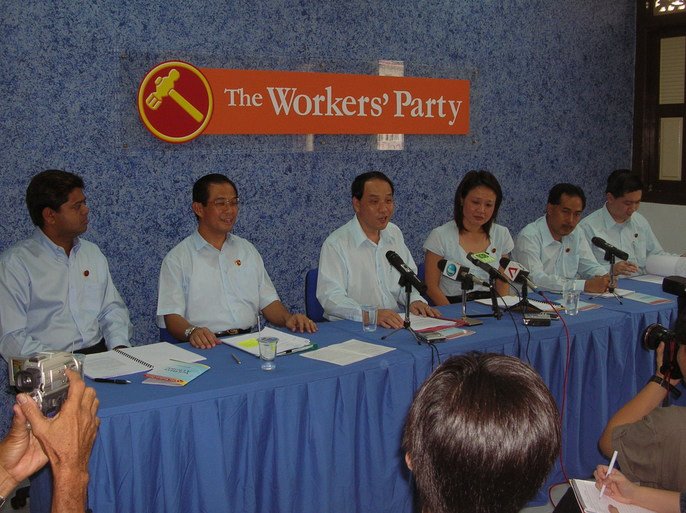 From left: James Gomez, Dr. Poh Lee Guan, Low Thia Khiang, Sylvia Lim, Mohammed Rahizan bin Yaacob, Tan Wui-Hua
For any political party in the world, it is inevitable that it needs to engage the press and local mass media to maximize its public outreach. Holding Press Conference is one important way of getting political messages and ideas across to the masses.
In Singapore's context, we all know how bias the local media could be when it comes to political news and reporting. I am a very keen observer of local mass media reporting of local political news. For the last election in 2001, it was really an eye opening experience to see how skewed and bias the local mass media could be in putting up the WORST shots on alternative parties they could get from rallies or walkabout to put up on newspapers and prime time TV news on all channels. We have Dr. Chee's close up shots of his shouting incident, TV shots on the falling of chairs and speakers during one of SDA rallies, TV shots on a man wanting to go to WP rally stage and speak but was wrestled away by police, shots on candidates stretching heads, shots on the commotion and SDA supporters stopping buses and vehicles to paste SDA posters on them....etc etc.
A picture speaks a thousand words, a stream of films speaks a million words! It is important for us to learn how to make use of every opportunities provided to put up the BEST images to the press so that they could take good camera shots from whichever angle they choose to.
The recent press conference for our launch of Manifesto 2006 is pretty successful in the sense that we have managed to improve on the image front for good camera shots. Take a look at the following photos which were taken last year on 5 March 2005 for Casino Forum and 15 Oct 2005 Youth Wing Forum. Make a comparison with the photo above, taken on 14 Jan 2006 Launching of Manifesto.
5 Mar 2005 Casino Forum

From left: Goh Meng Seng, James Gomez, Chia Tilik
15 Oct 2005 Youth Wing Forum

From Left: Michael Cheng, Sylvia Lim, Tan Wui-Hua, Dr. Kelvin Tan, Glenda Lim
I hope you see the vast differences betwen the three photographs. We have come a long way to learn and progress from the amateurish set up to a more professional image. We could observe that in the first public event, CasinoForum, that we held in our new HQ in 2005, the setup of the "stage" was not properly done. The speakers (yes, including me in it) were not seated in a conducive way for good photo shots. We were all seated too "spread out" and it would make photos produced to become "loose shots". Furthermore, the party logo and wording was not up yet. If it wasn't for the charts that I have put up, the back would look very bare.
For the Youth Wing Forum, we have improved tremendously by putting up the party logo and wording. However the sitting arrangement is still a bit loose as there was a gap between Michael Cheng, our guest speaker, and Sylvia Lim. Furthermore, if you observe carefully you would be able to see there is a vast difference between the photo on Manifesto Launch and the Youth Wing Forum. Although both photos are taken with the WP logo and wording at the back, the distance between the heads and this logo are different in the two photographs. Loose shots could occur by having people spreading too far from each other. It could also occur when the distance between the people and the object of interest (in this case our logo and wording) is too wide apart.
From a camera man's point of view, it is difficult to get a good camera framing or shots when the distance between the object of interest is far away from the people who are also the focus theme of the camera shot. You would feel that the first photo on our Manifesto Launch looks good at first sight but most people cannot explain why it looks better than the one on Youth Wing Forum. If you have seen the photographs published in the local newspapers or the TV news report on the Manifesto Launch, you would feel that the images are "good" as compared to previous coverage of WP's forums without knowing exactly why. The reason is very simple. Under the environment that is within our control, we try to do our best to fine tune the setting so that it could provide us with the best camera shots. If you click on the various photographs to enlarge and observe carefully, the main difference lies in the chairs the various individuals are sitting on!
The new chairs that we used in the Manifesto Launch are able to provide a "higher" seats to all the speakers on the panel. It provides adjustable heights to each different individuals so that they could adjust their seats according to their heights. If you look carefully you would find that the "head level" of each of the speakers in the Manifesto Launch are basically quite even compared to those in the other two photographs.
It is a common "camera trick" for studio or film makers to "adjust" the heights of those involved by various means; eg, adjustable chairs, wear high/low heels or simply put planks for the shorter one to step on it. Thus it is also important for us to learn how to make adjustments to the environment under our control so that we could present the best images for the mass media.
Goh Meng Seng
For the Youth Wing Forum, we have improved tremendously by putting up the party logo and wording. However the sitting arrangement is still a bit loose as there was a gap between Michael Cheng, our guest speaker, and Sylvia Lim. Furthermore, if you observe carefully you would be able to see there is a vast difference between the photo on Manifesto Launch and the Youth Wing Forum. Although both photos are taken with the WP logo and wording at the back, the distance between the heads and this logo are different in the two photographs. Loose shots could occur by having people spreading too far from each other. It could also occur when the distance between the people and the object of interest (in this case our logo and wording) is too wide apart.
From a camera man's point of view, it is difficult to get a good camera framing or shots when the distance between the object of interest is far away from the people who are also the focus theme of the camera shot. You would feel that the first photo on our Manifesto Launch looks good at first sight but most people cannot explain why it looks better than the one on Youth Wing Forum. If you have seen the photographs published in the local newspapers or the TV news report on the Manifesto Launch, you would feel that the images are "good" as compared to previous coverage of WP's forums without knowing exactly why. The reason is very simple. Under the environment that is within our control, we try to do our best to fine tune the setting so that it could provide us with the best camera shots. If you click on the various photographs to enlarge and observe carefully, the main difference lies in the chairs the various individuals are sitting on!
The new chairs that we used in the Manifesto Launch are able to provide a "higher" seats to all the speakers on the panel. It provides adjustable heights to each different individuals so that they could adjust their seats according to their heights. If you look carefully you would find that the "head level" of each of the speakers in the Manifesto Launch are basically quite even compared to those in the other two photographs.
It is a common "camera trick" for studio or film makers to "adjust" the heights of those involved by various means; eg, adjustable chairs, wear high/low heels or simply put planks for the shorter one to step on it. Thus it is also important for us to learn how to make adjustments to the environment under our control so that we could present the best images for the mass media.
Goh Meng Seng
WP Manifesto
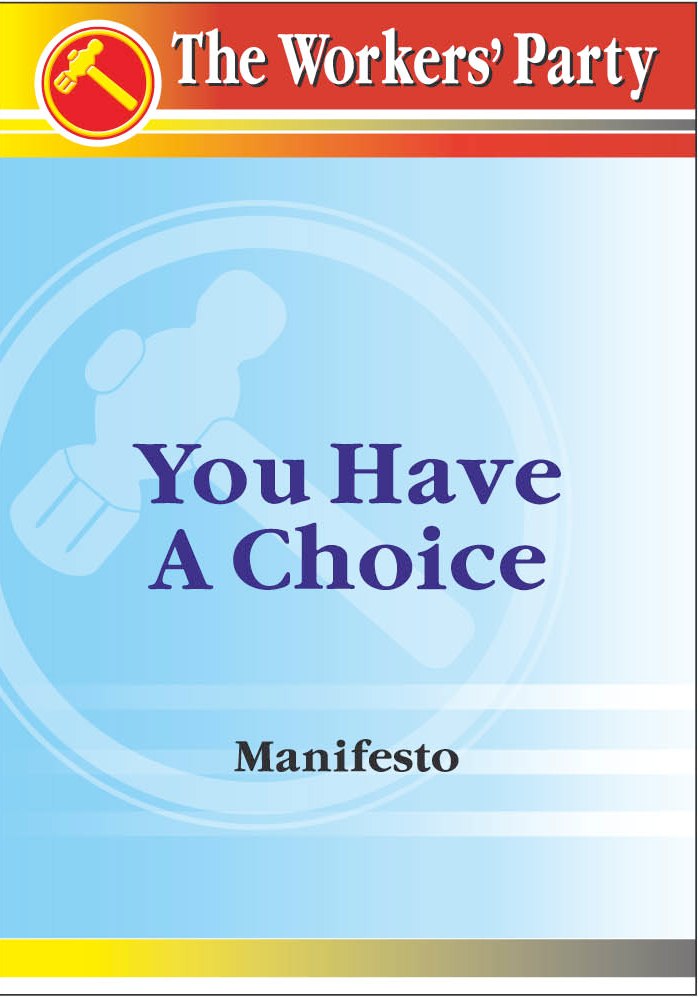 The long awaited Manifesto of Workers' Party has been successfully launched on 14 Jan 2006. There are 52 pages which included 14 chapters that cover almost all aspects of governance in all the ministries.
Among the more prominent BOLD ideas included in this Manifesto are those involving Proportionate Electoral Representation, Justice, Transport, Education, Freedom of Information, Unemployment Insurance, Healthcare financing and CPF.
The following is the outline of the Manifesto:
IntroductionChapter 1: Government and Civil Liberties
1A. Elections & Parliament
1B. Constitution
1C. Civil Service1D. Civil Liberties
1E. Cabinet
Chapter 2: Justice, Law and Order
2A. Judiciary2B. Legal Aid
2C. Protection of Victims
2D. Penal Code and Criminal Procedure Code
2E. Others
Chapter 3: Economic Policy
3A. SMEs and Local Businesses
3B. Potential Sectors of Growth
3C. Others
Chapter 4: Society
4A. Disabled
4B. Elderly and Family
4C. Unemployed
4D. Community
4E. Others
Chapter 5: Education
5A. Replacement of The Streaming System
5B. Balanced Resource Allocation
5C. Tertiary Education
5D. Others
Chapter 6: Health Care
6A. Medishield and Public Health Insurance
6B. Containing Health Care Costs
6C. Step-Down Care Facilities
Chapter 7: Public Housing
7A. Home Ownership
7B. Housing Administration
Chapter 8: Public Transport
Chapter 9: Environment
Chapter 10: National Security
10A. National Defence
10B. Foreign Affairs
Chapter 11: Arts, Media, Information and New Technology
11A. Arts
11B. Media
11C. Information
11D. New Technology
Chapter 12: Sports and Recreation
Chapter 13: Population
Chapter 14: Labour Policy and CPF
14A. Trade Unions
14B. Central Provident Fund
14C. Employment Act
This Manifesto is sold at $5.00 each. If you are interested to buy a copy, you could either email me or buy a copy at Workers' Party HQ Monday Open House (excluding Public Holiday) from 8.00pm to 9.30pm weekly, at 216 Syed Alwi Road #02-03.
Goh Meng Seng
Friday, December 16, 2005
Freedom is NOT FREE
Freedom is NOT FREE
Most of the time, people take for granted many little important but seemingly "insignificant" things around them. This complacency is especially glaring in the midst of the great debate over the insignificant fine over NS defaulters. Those who have not gone through National Service have such a "no big deal" attitude, so much so to the extent of belittling the whole process.
Our Freedom as a Nation depends on the many sacrifices of many people in the National Service and regular arm forces. The issue of the NS defaulter's case is not about dollars and cents but rather the insult to those who have made sacrifices to grant us the Freedom and Sovereignty as a Nation. It is of course partly the case of emotional imbalance but it is also the values we are cultivating in the process.
Similarly, people are taking their freedom in our democracy for granted. In many occasions, there are people would approach me and say WP should contest in this and that constituencies. I could only smile at them. I ask them, are they willing and prepared to come forward to contest in those constituencies themselves? If not, are they willing to fork out money to sponsor such teams, with their name and I/C numbers stated beside the amount of money they have donated to the party? By then, they would have been speechless. If not, are they willing to come forward to help out on the background, even without the need to sign up party membership? They would say no time, too busy.
It is interesting to note that some people have always asked us about why they have to pay for our Hammer publication or pay for our manifesto. Freedom is not FREE my friend! There are already so many people making sacrifices to provide you the choice and your right to vote, what else could you ask for? Yes, by all means, if you could ill afford to pay for our publication, you could well "opt out" of the purchase. We could understand that, as many Singaporeans have either lose their jobs or taken hefty pay cuts in one way or another.
Our existence as an alternative political party is meaningful to each and every Singaporeans as it is a way to manifest the Power of the People: When you have a choice, you will have the Bargaining Power. But this platform is shouldered on by many people's sacrifices, in terms of effort, time, opportunities, family life, monetary contributions and many other forms. On top of all these, there is the important element of "risk".
One of my friend (just call him Alex for convenience sake) paid me a visit one day and we have dinner together. Alex is a typical middle class professional who is well educated and has a wonderful family. Our conversation naturally ended up with the concerns expressed on my involvement in "the risky business" of non-PAP politics.
Alex, being a good friend of mine, has always shown concerns about my involvement in "opposition" politics. First there is a question of "needs". Second, there is a question of worthy sacrifices one has to make. Third, the necessity of risking myself and most importantly, exposing my family to possible hardship just because I "go against PAP". I have asked a typical question that is always the talk of the town, "Have you thought of emigration out of Singapore before?" He said "No". I asked again, "Then your children will be living in Singapore?" "Yes", he replied. I said, "Do you think Singapore's present environment is good for your kids?" "Yes....." he hesitated. "The fact that you are concerned about I getting into trouble by merely taking part in the democratic political process, isn't that an unhealthy mindset behind it?" Paused.
I put it simply to him that if I am going to stay in Singapore and have my children live in it, I won't want my children to live in this very FEAR that almost every Singaporeans are experiencing. It would be totally irresponsible for me to subject my children to this exposure. Thus, this is the primary need to change the situation we have now for the sake of our children....not only mine, his children as well, all future generations of Singapore. I could choose not to do anything to it for the FEAR of the repercussions but who is going to make sure my children and future generations to have a better environment OUT OF FEAR?
Someone has to take the risks and sacrifices to make things better. Imagine that if our forefathers have chosen to keep quiet and stay tame in front of the colonial rulers, would we ever evolve into a Nation today? Many have sacrificed their money, time, blood and even lives for what we have right now. If we know that the present country that we have now is less than desirable or fall short of our basic expectation of a truly democratic country with true FREEDOM (from that erratic FEAR) for ourselves and our children, why wouldn't we change it, just like what our forefathers have chosen to make sacrifices to change their environment for us back then?
Yes, FREEDOM IS NOT FREE. And most importantly, FREEDOM has the element of free ridership in it. Everyone may want it, but all waiting for someone to get it for them.
I do not want my children to be caged by the very same FEAR that have arrested many Singaporeans' mind for decades. Most probably, the only most valuable gift I could give them is to fight for their liberation from this cage of Fear.
Are all these little sacrifices worthy? Freedom is priceless, though it is Not Free.
Goh Meng Seng
Most of the time, people take for granted many little important but seemingly "insignificant" things around them. This complacency is especially glaring in the midst of the great debate over the insignificant fine over NS defaulters. Those who have not gone through National Service have such a "no big deal" attitude, so much so to the extent of belittling the whole process.
Our Freedom as a Nation depends on the many sacrifices of many people in the National Service and regular arm forces. The issue of the NS defaulter's case is not about dollars and cents but rather the insult to those who have made sacrifices to grant us the Freedom and Sovereignty as a Nation. It is of course partly the case of emotional imbalance but it is also the values we are cultivating in the process.
Similarly, people are taking their freedom in our democracy for granted. In many occasions, there are people would approach me and say WP should contest in this and that constituencies. I could only smile at them. I ask them, are they willing and prepared to come forward to contest in those constituencies themselves? If not, are they willing to fork out money to sponsor such teams, with their name and I/C numbers stated beside the amount of money they have donated to the party? By then, they would have been speechless. If not, are they willing to come forward to help out on the background, even without the need to sign up party membership? They would say no time, too busy.
It is interesting to note that some people have always asked us about why they have to pay for our Hammer publication or pay for our manifesto. Freedom is not FREE my friend! There are already so many people making sacrifices to provide you the choice and your right to vote, what else could you ask for? Yes, by all means, if you could ill afford to pay for our publication, you could well "opt out" of the purchase. We could understand that, as many Singaporeans have either lose their jobs or taken hefty pay cuts in one way or another.
Our existence as an alternative political party is meaningful to each and every Singaporeans as it is a way to manifest the Power of the People: When you have a choice, you will have the Bargaining Power. But this platform is shouldered on by many people's sacrifices, in terms of effort, time, opportunities, family life, monetary contributions and many other forms. On top of all these, there is the important element of "risk".
One of my friend (just call him Alex for convenience sake) paid me a visit one day and we have dinner together. Alex is a typical middle class professional who is well educated and has a wonderful family. Our conversation naturally ended up with the concerns expressed on my involvement in "the risky business" of non-PAP politics.
Alex, being a good friend of mine, has always shown concerns about my involvement in "opposition" politics. First there is a question of "needs". Second, there is a question of worthy sacrifices one has to make. Third, the necessity of risking myself and most importantly, exposing my family to possible hardship just because I "go against PAP". I have asked a typical question that is always the talk of the town, "Have you thought of emigration out of Singapore before?" He said "No". I asked again, "Then your children will be living in Singapore?" "Yes", he replied. I said, "Do you think Singapore's present environment is good for your kids?" "Yes....." he hesitated. "The fact that you are concerned about I getting into trouble by merely taking part in the democratic political process, isn't that an unhealthy mindset behind it?" Paused.
I put it simply to him that if I am going to stay in Singapore and have my children live in it, I won't want my children to live in this very FEAR that almost every Singaporeans are experiencing. It would be totally irresponsible for me to subject my children to this exposure. Thus, this is the primary need to change the situation we have now for the sake of our children....not only mine, his children as well, all future generations of Singapore. I could choose not to do anything to it for the FEAR of the repercussions but who is going to make sure my children and future generations to have a better environment OUT OF FEAR?
Someone has to take the risks and sacrifices to make things better. Imagine that if our forefathers have chosen to keep quiet and stay tame in front of the colonial rulers, would we ever evolve into a Nation today? Many have sacrificed their money, time, blood and even lives for what we have right now. If we know that the present country that we have now is less than desirable or fall short of our basic expectation of a truly democratic country with true FREEDOM (from that erratic FEAR) for ourselves and our children, why wouldn't we change it, just like what our forefathers have chosen to make sacrifices to change their environment for us back then?
Yes, FREEDOM IS NOT FREE. And most importantly, FREEDOM has the element of free ridership in it. Everyone may want it, but all waiting for someone to get it for them.
I do not want my children to be caged by the very same FEAR that have arrested many Singaporeans' mind for decades. Most probably, the only most valuable gift I could give them is to fight for their liberation from this cage of Fear.
Are all these little sacrifices worthy? Freedom is priceless, though it is Not Free.
Goh Meng Seng
Wednesday, December 07, 2005
Value Of Citizenship
Value of Citizenship II ---- Voting Rights
One of the fundamental rights that constitute our value of citizenship lies in our voting rights. If we trace the political development of Singapore, this very basic right of a citizen in a supposedly democratic country has slowly diminished when the PAP government has started to introduce the GRC system back in 1988 General Elections.
PAP used the reasoning of racial representation to rationalize the need of the GRC system but most people know that they were just using the GRC to curb and prevent the drastic drop of support for it to materialize into more seats won by the opposition parties. In short, it is a game of large numbers, led by a ?heavy weight? minister.
If GRC system is really for the sake of ?racial representation?, there are many other means of doing it. In fact, by increasing the number of seats of GRC from 3 or 4, to 5 or 6 would actually reduce the proportionate representation (note, in Singapore, minority races make up of about 25% of total population). We could declare a proportionate number of constituencies to be contested by minority candidates only, without the need of grouping the constituencies together as a big GRC!
The rational that minority candidates may not be elected into parliament if they stood alone in a constituency is totally flawed. Workers? Party secretary general JBJ has won in 1981 by-election and again in 1984 GE even when he is a minority candidate contesting against PAP Chinese candidates! PAP?s own minority candidates have won many electoral battles in the past before single handedly!
Due to the GRC system together with increased election deposits demanded from potential candidates, participation of opposition parties in 1991, 1997 and 2001 GEs have decreased dramatically. This reduced of political participation translated into massive walkovers for PAP. Thus many of us would feel that PAP?s claim of ?Party of Choice? is totally absurd because in actual fact, they are the ?Party of NO Choice? or rather, ?Party of DEFAULT Choice!
It would also mean that over half of Singaporeans have eventually lost their right to vote TECHNICALLY. This has grave effects on the development of Nationhood as well as political apathy. This is, in essence, an erosion of our Value of Citizenship as a whole.
In my post on Power To The People ( http://singaporealternatives.blogspot.com/2005/09/power-to-people.html ), I have stated that the only way to preserve and enhance the people?s power is to protect their right to vote and having a choice in the political system. This is important as such bargaining power derived from alternative choices would serve as the basis to protect their benefits and get better deals out of the political system. This is in fact the most important Value of Citizenship so to speak.
It is time for all Singaporeans to ponder over this important aspect of our value of citizenship while we keep protesting about the light punishment over NS defaulters.
Goh Meng Seng
One of the fundamental rights that constitute our value of citizenship lies in our voting rights. If we trace the political development of Singapore, this very basic right of a citizen in a supposedly democratic country has slowly diminished when the PAP government has started to introduce the GRC system back in 1988 General Elections.
PAP used the reasoning of racial representation to rationalize the need of the GRC system but most people know that they were just using the GRC to curb and prevent the drastic drop of support for it to materialize into more seats won by the opposition parties. In short, it is a game of large numbers, led by a ?heavy weight? minister.
If GRC system is really for the sake of ?racial representation?, there are many other means of doing it. In fact, by increasing the number of seats of GRC from 3 or 4, to 5 or 6 would actually reduce the proportionate representation (note, in Singapore, minority races make up of about 25% of total population). We could declare a proportionate number of constituencies to be contested by minority candidates only, without the need of grouping the constituencies together as a big GRC!
The rational that minority candidates may not be elected into parliament if they stood alone in a constituency is totally flawed. Workers? Party secretary general JBJ has won in 1981 by-election and again in 1984 GE even when he is a minority candidate contesting against PAP Chinese candidates! PAP?s own minority candidates have won many electoral battles in the past before single handedly!
Due to the GRC system together with increased election deposits demanded from potential candidates, participation of opposition parties in 1991, 1997 and 2001 GEs have decreased dramatically. This reduced of political participation translated into massive walkovers for PAP. Thus many of us would feel that PAP?s claim of ?Party of Choice? is totally absurd because in actual fact, they are the ?Party of NO Choice? or rather, ?Party of DEFAULT Choice!
It would also mean that over half of Singaporeans have eventually lost their right to vote TECHNICALLY. This has grave effects on the development of Nationhood as well as political apathy. This is, in essence, an erosion of our Value of Citizenship as a whole.
In my post on Power To The People ( http://singaporealternatives.blogspot.com/2005/09/power-to-people.html ), I have stated that the only way to preserve and enhance the people?s power is to protect their right to vote and having a choice in the political system. This is important as such bargaining power derived from alternative choices would serve as the basis to protect their benefits and get better deals out of the political system. This is in fact the most important Value of Citizenship so to speak.
It is time for all Singaporeans to ponder over this important aspect of our value of citizenship while we keep protesting about the light punishment over NS defaulters.
Goh Meng Seng
Thursday, November 24, 2005
The Value of Citizenship ---- $5000?
The Value of Citizenship ---- $5000?
The recent STORM of a pianist Melvyn Tan getting off the hook of NS liability simply by paying a mere fine of $5000 is flooding internet forums fast.
On my personal side, as an infantry logistic officer, I really do not know how would I face my men when I go back to my next ICT! Although I think the primary problem lies with the Value of Citizenship, but the $5000 fine is really an insult to the many sacrifices made by many NS men all over Singapore. This incident will surely affect the morale of all military men (being current soldiers or reservists) in Singapore. An army with low morale is an army doomed to lose a war.
Ultimately, I think the root problem lies with the value of our citizenship. This is especially critical in the face of huge army of foreign workers competing for jobs in Singapore?s small market.
The recent moves by PAP government in increasing polyclinic fees for PRs and foreign workers are targeted to arrest this growing perception that there is no value in our citizenship. Foreign students are only paying 10% more fees than local students in universities, despite the fact that they have serve 2 years of National Service.
This growing subtle discontent of Singaporeans have suddenly exploded in the face of this ?outrageous? ?exception? made for Melvyn Tan.
People are venting anger at Melvyn Tan (one who has decided to quit Singapore in his early life but chose to come back 30 years later) but I say, they should instead look at the issue with cool logic. The problem lies with the very low esteem and value of our citizenship.
How would one feel if the NS policy states that for all of those who have completed NS and serving reservist, they will be fully subsidized for their medical bills? This is turning NS from a liability to each individual into an asset to those who have served them!
Thus, to me, the question doesn?t lie in how severe the punishment has been meted out to people like Melvyn Tan, but rather, what is our INTRINSIC value of our citizenship!
Besides, if we could increase the value of our citizenship, there will be less people willing to emigrate out. This is a very realistic aspect of life. PAP government has tried to enhance our values of citizenship by embarking on ?asset enhancement scheme? back in the 90s but failed miserably. It has created a property bubble instead and subsequently negative assets for many people.
If PAP government has not been that ?stingy? on benefits for Singaporeans at large, I think Melvyn Tan saga would have been a non-issue.
I would encourage Singaporeans to think beyond the emotional knee jerk reactions to Melvyn Tan?s case and see clearly the root of tbe problem lies in the low value of our citizenship. And the only way to make PAP government realizes that they need to enhance the value of our citizenship is to squeeze them more via the ballot box.
The following are some of my replies and thoughts expressed in Sammyboy forum.
Dear lambaste2,
Sorry that I gave you the wrong impression.
Although this issue could "anger" alot of Singaporeans at large, but I am asking this question to form a logical conclusion.
What is the main difference between a person like him who is now no longer a Singapore citizen and do not need to serve NS or reservist and a person who gave up his citizenship?
The main mistake he made was not to surrender his citizenship "EARLIER" to avoid the NS liability. But wait, it is an offence not to heed the NS call for the 2.5 years service even when you decide to surrender your citizenship, but it is ok for Singaporean to call it quit and avoid the reservist liability half way of his life (even though he has served 2.5years)? Does it really make any difference between avoiding 2.5 years of NS as compared to possibly 10 to 15 years of reservist liability?
Take it this way, for every year of reservist liability, you have to go back for about 2 weeks each year. Thus, it would be 20 weeks for 10 years. 20 weeks is about 5 months. So it is not an offence to avoid the 5 months life long reservist liability? For officers, it would be worse as technically speaking their potential liability goes up to 55 yr old.
My point is that if we are not going to charge any individuals who avoid his potential reservist liability of 5 months when he become citizen of another country, is it consistent to charge any individuals that avoid 2.5 years of NS liability?
Of course, the law is written such a way that you could commit a crime if you avoid 2.5 years NS liability by becoming citizen of another country but not the reservist liability but is this law logical and consistent in any sense? It doesn't matter when or at what age you give up your citizenship but the fact is, you would be avoiding NS or reservist liability in doing so. But one is punishable while the other is not?
I am not making any stand here yet, if some of you want to jump the gun and accuse me of anything.
To me, it is pretty straight forward. If one would go to the extent of giving up his citizenship for whatever opportunities or monetary rewards else where just to escape NS or reservist, his heart is not with Singapore. Period. It is totally irrelevant with regards to when he gave up his citizenship.
I understand the emotional side of many of us who have gone through NS and still struggling with the every year reservist recall. You feel angry, unfair and mentally unbalanced...whatever, but we should look at this from another perspective.
The system is flawed and the law is flawed.
The value of citizenship does not lie on how severe the punishment is meted out to those who desert their service to our country. Instead, the value of citizenship depends on the benefits we enjoy as a citizen as compared to non-citizens. If one chose to give up his citizenship just because he does not want to do NS, so be it. Why need to punish him for something that he is not willing to do and willing to sacrifice his benefits as a citizen?
Thus the next question, WHAT IS THE VALUE of our citizenship? The $5000 fine is an insult to our service to our nation as NS men. It should not happen that way at all. It practically means that our life long service as NSmen (including the 2.5yrs) is worthless. Comparing to some of us in Singapore who are willing to be jailed for 3 years just because they are not willing to do carry arms, this law is totally flawed.
The value of our citizenship is how much our govt takes care of us in return. This is the social contract. I think most Singaporeans who have done NS won't be that angry if they enjoy more benefits in return for the National Service that they have done for Singapore.
This is the key and root of the problem. It all starts with the Value of Citizenship.
Goh Meng Seng
Dear mips4,
Why would one "owe" the country the obligation of National Service if he is willing to give up his citizenship? This is crux of the matter.
If there are many people who are willing to give up their citizenship just because they do not want to do NS, what does that mean?
1) This country is not WORTH their effort in defending
2) They feel that there are better options than being Singaporeans
3) He is just a whimp that is just too afraid of "hardship" in NS
Whatever the reasons, it simply means that Singapore's citizenship "WORTH NEXT TO NOTHING" in their perspective. You actually expect these people to "defend" your family in the event of war?
Fighting a war is not about having the number standing in the firing line. The strength of the soldiers' psyche normally determines the ultimate outcome.
You must always remember there is a difference in your rhetoric...yes, every citizens agree that we should do NS. But those who refused to do, have given up their citizenship and technically, they are no longer citizens.
You must also remember that it is not just $5000 that he has given up to exchange not to do NS; he has given up his citizenship as well.
I would agree that one is to complete his part in NS if he wants to be part of this nation. But that does not mean that you are "slaves" to this nation just because you are born in Singapore. If one chose not to become the citizen of this nation, you also expect him to oblige to do NS for this nation? Such logic is flawed.
Well, whatever moral authority one has over the others, the bottom line is, we must make our citizenship ATTRACTIVE enough for others to feel the WORTH to make sacrifices for it. This lies in the value of citizenship.
Goh Meng Seng
Dear techpk88,
I do agree with you totally that it is an insult to our effort in serving NS by putting a fine of $5K on him.
Thus, my personal stand is the system is flawed and inconsistant. I would say that if you want to be "fair", then one would be allowed to decide whether he wants to keep his citizenship and complete his NS or that he gives up his citizenship and thus, no need to do NS. Alot of other variables could exist. In fact, in a way, the present system gives you the option, really; you could just refuse to come back to Singapore for NS and then give up your citizenship just like what he did. On top of that, exile is imposed on these people. The system is flawed in the sense that the exile part has been breached by the simple fine of $5000. And of course, to insult us further, he is being appointed to our Arts Council. We are sending the wrong signal that you could be a quitter but at the end of the day, our country could stay "beg" your return even if you abandon the country and refused to oblige to the country's standard NS liability.
The question is, even if the govt allows people to give up their citizenship in exchange of not doing NS, how many people have the ability or could well afford to do just that? I believe that this is no easy question.
I believe this is a very emotional thing for everyone who has gone through NS, same for me. But dispelling the emotions aside, you look at the situation with cool logic, you will see where the problems lie.
A simple example: If the govt say all those who have serve NS plus reservist will enjoy more subsidies for their medical fees, will you feel as angry as you are now?
NS cum reservist right now are being considered as "liability" instead of "assets" to us. If we change them into "assets" to everyone who have gone through them, who will complain?
Thus, the root problem is here and the whole system that make NS and reservist as "liability" to us is totally flawed and inconsistent.
Goh Meng Seng
The recent STORM of a pianist Melvyn Tan getting off the hook of NS liability simply by paying a mere fine of $5000 is flooding internet forums fast.
On my personal side, as an infantry logistic officer, I really do not know how would I face my men when I go back to my next ICT! Although I think the primary problem lies with the Value of Citizenship, but the $5000 fine is really an insult to the many sacrifices made by many NS men all over Singapore. This incident will surely affect the morale of all military men (being current soldiers or reservists) in Singapore. An army with low morale is an army doomed to lose a war.
Ultimately, I think the root problem lies with the value of our citizenship. This is especially critical in the face of huge army of foreign workers competing for jobs in Singapore?s small market.
The recent moves by PAP government in increasing polyclinic fees for PRs and foreign workers are targeted to arrest this growing perception that there is no value in our citizenship. Foreign students are only paying 10% more fees than local students in universities, despite the fact that they have serve 2 years of National Service.
This growing subtle discontent of Singaporeans have suddenly exploded in the face of this ?outrageous? ?exception? made for Melvyn Tan.
People are venting anger at Melvyn Tan (one who has decided to quit Singapore in his early life but chose to come back 30 years later) but I say, they should instead look at the issue with cool logic. The problem lies with the very low esteem and value of our citizenship.
How would one feel if the NS policy states that for all of those who have completed NS and serving reservist, they will be fully subsidized for their medical bills? This is turning NS from a liability to each individual into an asset to those who have served them!
Thus, to me, the question doesn?t lie in how severe the punishment has been meted out to people like Melvyn Tan, but rather, what is our INTRINSIC value of our citizenship!
Besides, if we could increase the value of our citizenship, there will be less people willing to emigrate out. This is a very realistic aspect of life. PAP government has tried to enhance our values of citizenship by embarking on ?asset enhancement scheme? back in the 90s but failed miserably. It has created a property bubble instead and subsequently negative assets for many people.
If PAP government has not been that ?stingy? on benefits for Singaporeans at large, I think Melvyn Tan saga would have been a non-issue.
I would encourage Singaporeans to think beyond the emotional knee jerk reactions to Melvyn Tan?s case and see clearly the root of tbe problem lies in the low value of our citizenship. And the only way to make PAP government realizes that they need to enhance the value of our citizenship is to squeeze them more via the ballot box.
The following are some of my replies and thoughts expressed in Sammyboy forum.
Dear lambaste2,
Sorry that I gave you the wrong impression.
Although this issue could "anger" alot of Singaporeans at large, but I am asking this question to form a logical conclusion.
What is the main difference between a person like him who is now no longer a Singapore citizen and do not need to serve NS or reservist and a person who gave up his citizenship?
The main mistake he made was not to surrender his citizenship "EARLIER" to avoid the NS liability. But wait, it is an offence not to heed the NS call for the 2.5 years service even when you decide to surrender your citizenship, but it is ok for Singaporean to call it quit and avoid the reservist liability half way of his life (even though he has served 2.5years)? Does it really make any difference between avoiding 2.5 years of NS as compared to possibly 10 to 15 years of reservist liability?
Take it this way, for every year of reservist liability, you have to go back for about 2 weeks each year. Thus, it would be 20 weeks for 10 years. 20 weeks is about 5 months. So it is not an offence to avoid the 5 months life long reservist liability? For officers, it would be worse as technically speaking their potential liability goes up to 55 yr old.
My point is that if we are not going to charge any individuals who avoid his potential reservist liability of 5 months when he become citizen of another country, is it consistent to charge any individuals that avoid 2.5 years of NS liability?
Of course, the law is written such a way that you could commit a crime if you avoid 2.5 years NS liability by becoming citizen of another country but not the reservist liability but is this law logical and consistent in any sense? It doesn't matter when or at what age you give up your citizenship but the fact is, you would be avoiding NS or reservist liability in doing so. But one is punishable while the other is not?
I am not making any stand here yet, if some of you want to jump the gun and accuse me of anything.
To me, it is pretty straight forward. If one would go to the extent of giving up his citizenship for whatever opportunities or monetary rewards else where just to escape NS or reservist, his heart is not with Singapore. Period. It is totally irrelevant with regards to when he gave up his citizenship.
I understand the emotional side of many of us who have gone through NS and still struggling with the every year reservist recall. You feel angry, unfair and mentally unbalanced...whatever, but we should look at this from another perspective.
The system is flawed and the law is flawed.
The value of citizenship does not lie on how severe the punishment is meted out to those who desert their service to our country. Instead, the value of citizenship depends on the benefits we enjoy as a citizen as compared to non-citizens. If one chose to give up his citizenship just because he does not want to do NS, so be it. Why need to punish him for something that he is not willing to do and willing to sacrifice his benefits as a citizen?
Thus the next question, WHAT IS THE VALUE of our citizenship? The $5000 fine is an insult to our service to our nation as NS men. It should not happen that way at all. It practically means that our life long service as NSmen (including the 2.5yrs) is worthless. Comparing to some of us in Singapore who are willing to be jailed for 3 years just because they are not willing to do carry arms, this law is totally flawed.
The value of our citizenship is how much our govt takes care of us in return. This is the social contract. I think most Singaporeans who have done NS won't be that angry if they enjoy more benefits in return for the National Service that they have done for Singapore.
This is the key and root of the problem. It all starts with the Value of Citizenship.
Goh Meng Seng
Dear mips4,
Why would one "owe" the country the obligation of National Service if he is willing to give up his citizenship? This is crux of the matter.
If there are many people who are willing to give up their citizenship just because they do not want to do NS, what does that mean?
1) This country is not WORTH their effort in defending
2) They feel that there are better options than being Singaporeans
3) He is just a whimp that is just too afraid of "hardship" in NS
Whatever the reasons, it simply means that Singapore's citizenship "WORTH NEXT TO NOTHING" in their perspective. You actually expect these people to "defend" your family in the event of war?
Fighting a war is not about having the number standing in the firing line. The strength of the soldiers' psyche normally determines the ultimate outcome.
You must always remember there is a difference in your rhetoric...yes, every citizens agree that we should do NS. But those who refused to do, have given up their citizenship and technically, they are no longer citizens.
You must also remember that it is not just $5000 that he has given up to exchange not to do NS; he has given up his citizenship as well.
I would agree that one is to complete his part in NS if he wants to be part of this nation. But that does not mean that you are "slaves" to this nation just because you are born in Singapore. If one chose not to become the citizen of this nation, you also expect him to oblige to do NS for this nation? Such logic is flawed.
Well, whatever moral authority one has over the others, the bottom line is, we must make our citizenship ATTRACTIVE enough for others to feel the WORTH to make sacrifices for it. This lies in the value of citizenship.
Goh Meng Seng
Dear techpk88,
I do agree with you totally that it is an insult to our effort in serving NS by putting a fine of $5K on him.
Thus, my personal stand is the system is flawed and inconsistant. I would say that if you want to be "fair", then one would be allowed to decide whether he wants to keep his citizenship and complete his NS or that he gives up his citizenship and thus, no need to do NS. Alot of other variables could exist. In fact, in a way, the present system gives you the option, really; you could just refuse to come back to Singapore for NS and then give up your citizenship just like what he did. On top of that, exile is imposed on these people. The system is flawed in the sense that the exile part has been breached by the simple fine of $5000. And of course, to insult us further, he is being appointed to our Arts Council. We are sending the wrong signal that you could be a quitter but at the end of the day, our country could stay "beg" your return even if you abandon the country and refused to oblige to the country's standard NS liability.
The question is, even if the govt allows people to give up their citizenship in exchange of not doing NS, how many people have the ability or could well afford to do just that? I believe that this is no easy question.
I believe this is a very emotional thing for everyone who has gone through NS, same for me. But dispelling the emotions aside, you look at the situation with cool logic, you will see where the problems lie.
A simple example: If the govt say all those who have serve NS plus reservist will enjoy more subsidies for their medical fees, will you feel as angry as you are now?
NS cum reservist right now are being considered as "liability" instead of "assets" to us. If we change them into "assets" to everyone who have gone through them, who will complain?
Thus, the root problem is here and the whole system that make NS and reservist as "liability" to us is totally flawed and inconsistent.
Goh Meng Seng
Thursday, November 10, 2005
Blogging : The New Political Frontier?
During each and every elections right from 1990s, alternative source of information on the political contests have been put online.
Independent reports on opposition rallies have been written and posted on forums and websites. These reports are a source of information alternative to local media. I was one of those who benefited from such alternative sources. I attended my very first rally in Potong Pasir back in 1991 after reading certain independent reports on opposition rallies which claimed that local media had grossly misrepresented the real situation on the ground. With an independent mind, I decided to see for myself what really happened on the ground and thus, I made my first ever trip to a political gathering. This trip is a very important step in my political awakening process in which I have confirmed the accurracy of previous alternative reports on opposition rallies.
It was also only then I realize fully the propagandus nature of local media which is skewed totally towards the ruling party PAP. From the experience of 1997 election bias reporting by local media, I decided to form a small group of local reporters when Sintercom decided to call it quit after it refused to succumb to PAP government pressure to register itself as political website. This alternative reporting organized by me was obviously drown by the full blast of biasness of local media.
Political battles are fought on various fronts but the media that projects messages to the voters is the crucial arm with strategic importance. In the past, communist and autocratic government could prolong their monopoly of power in their country with little opposition from their people basically because they could control information flow within their country. The most obvious tactic they used was control local media, shut out external foriegn media. In Singapore's context, though foreign publications are allowed to be distributed locally, but political content has been tightly controlled. The local media is also crucial for the autocratic government in social engineering and brain washing programme, so to cultivate the "political correctness" of public mindset. It is a powerful tool of political evangelism.
However, the rapid growth of the internet has somehow prevented autocratic government from effectively control information flow unless they want to be like North Korea that sacrifices their nation's growth and development just to protect its autocratic government. PAP wants to have the best of both sides; it wants the benefits of having internet but at the same time, protect its monopoly of power from the potential harm of this medium which could be used as alternative source of political information.
I suspect that they have changed strategy in recent time. They are trying to project an impression that the local media is "CREDIBLE" when it comes to coverage of political issues. That is why local media started to engage opposition parties, especially Workers' Party so to garner political trust from its readers/clients.
This could mean several things. First, it means that they realize that they could no longer play the game of total control of the media anymore else they risk losing all credibility at one go. Controlling access to alternative source of information which may be easily confirmed as credibility in contrast to the bias reporting of local media is not easy in this globalized and internet-linked world. My personal experience of "political awakening" due to consciousness of the unfair reporting is a prime example of how alternative source of information could destroy the credibility of local media almost INSTANTLY.
Secondly, the only way out for them is to change strategy. They will try to gain "political trust" by portraying themselves as "fair and just" by giving some coverage to opposition parties during "off election time". Only by doing so will prevent a total "unconscious boycott" of local media during GE by the masses and forcing them to turn to alternative sources of information from the internet. A more delicated, sophiscated and calibrated approach may be applied to gain trust from the masses and at the same time, promote the "preferred" ruling party in a more subtle ways instead of past "hard selling".
How successful are they in moulding a positive perception to local media? In the past, there are more people who are skeptical or even have total distrust of local media's political reporting especially during GE. But now, more people are "praising" or at least "admit" that the local media is "opening up". They have succeeded to gain a level of trust from the middle ground to a certain degree.
Having said that, we will not know what will happen in the coming elections. My personal belief is that a leopard will not change its spots, no matter what.
It is thus my wish that more Singaporean Bloggers will contribute to our democratic process by actively engaged in providing alternative sourcesof information and commentary in the coming General Electinos. The Monopoly of Power is derived from the Monopoly of Information flow. For the good of our future generations, we should seek democratic advancement by depriving any attempts of monopoly of power. Thus, as a socially awared citizen, what we could do is to deprive them the monopoly of information flow thus the monopoly of power by coming forward bravely to blog about the general elections.
Well, PAP government will try to "control" bloggers in this context. There are two tier strategies. First, they will try to discredit the blogsphere with whatever apparatus they have. It is in their interests to control the information flow in order to maintain their monopoly of power. But I think we will have to be brave in rejecting such scare tactics. The recent legal suits against bloggers are prime examples on how the blogsphere could be totally discredited by exposing a few "black sheeps" among the whole blogger community. This is a similar tactic they used against non-PAP parties. Each parties are different but they chose to lump them together as "Opposition Parties" for the convenient of hitting the whole group of parties that are contesting against them. What they need to do is to find fault with a few guys in these "Opposition Parties" and blow them out of proportion, to create an impression or perception that ALL in the grouping call "Opposition Parties" are just like that. They are using the same methodology against bloggers now. Bloggers at large are portrayed as "whiners", "complain king", "bo liao people", "irresponsible people", "rebellous" etc etc. For every report that they made bad about the blogsphere, they hit hard on the "credibility" of the blogsphere.
For those who are in the knowing, we know there will always be good and bad apples in the basket. For the local media and authority to systematically discredit the whole blogspere is just too skewed. It is of course self interests that make them do so... to protect their stand as the sole "credible" source of information.
The second strategy is of course using the FEAR factor. Constant demonstration that "irresponsible blogging" will get you in trouble. This subtle threat of lawsuits and criminal charges are similar to the rule of FEAR they have exerted on the "Opposition" group. What they need to do is to sue a few guys and the rest who may be interested to join non-PAP parties will think many times. This rule of FEAR is pretty effective in stiffling the growth of political participation in non-PAP politics but unfortunately, it also affect PAP's recruitment of good candidates.
We have to fight against these two strategies. The first one is easy. Promote ourselves as reponsible bloggers by action through our writings. The second one is a bit more tricky. One have to conquer his own FEAR to arrive to that enlightenment stage. One way is to have a strong belief in what you are doing is GOOD for Singapore. This Moral High Ground will be the source of your Moral Courage. The other way is to believe that you are not only doing for your own good; you are doing something that is going to benefit your future generations. We have been living in this subtle FEAR for so long in Sngapore. It would be irresponsible for us to continue to let our children and future generations to continue to live in this FEAR.
The Blogging sphere will only become a credible political front of initiating change in our country if and only if bloggers at large are willing to contribute towards the democratic process. Yes, simply by providing credible alternative views to local media, we will be contributing tremendously to our Nation's democratic progress.
James Gomez has written an interesting article on political blogging. The link is as follows:
http://www.jamesgomeznews.com/article.php?AID=230
We will be putting up links to blogs that are willing to provide alternative source of information and commentaries. If you are willing to take the crucial step towards a better Singapore for everybody and your future generations, please email me so that I could make arrangement.
Goh Meng Seng
Independent reports on opposition rallies have been written and posted on forums and websites. These reports are a source of information alternative to local media. I was one of those who benefited from such alternative sources. I attended my very first rally in Potong Pasir back in 1991 after reading certain independent reports on opposition rallies which claimed that local media had grossly misrepresented the real situation on the ground. With an independent mind, I decided to see for myself what really happened on the ground and thus, I made my first ever trip to a political gathering. This trip is a very important step in my political awakening process in which I have confirmed the accurracy of previous alternative reports on opposition rallies.
It was also only then I realize fully the propagandus nature of local media which is skewed totally towards the ruling party PAP. From the experience of 1997 election bias reporting by local media, I decided to form a small group of local reporters when Sintercom decided to call it quit after it refused to succumb to PAP government pressure to register itself as political website. This alternative reporting organized by me was obviously drown by the full blast of biasness of local media.
Political battles are fought on various fronts but the media that projects messages to the voters is the crucial arm with strategic importance. In the past, communist and autocratic government could prolong their monopoly of power in their country with little opposition from their people basically because they could control information flow within their country. The most obvious tactic they used was control local media, shut out external foriegn media. In Singapore's context, though foreign publications are allowed to be distributed locally, but political content has been tightly controlled. The local media is also crucial for the autocratic government in social engineering and brain washing programme, so to cultivate the "political correctness" of public mindset. It is a powerful tool of political evangelism.
However, the rapid growth of the internet has somehow prevented autocratic government from effectively control information flow unless they want to be like North Korea that sacrifices their nation's growth and development just to protect its autocratic government. PAP wants to have the best of both sides; it wants the benefits of having internet but at the same time, protect its monopoly of power from the potential harm of this medium which could be used as alternative source of political information.
I suspect that they have changed strategy in recent time. They are trying to project an impression that the local media is "CREDIBLE" when it comes to coverage of political issues. That is why local media started to engage opposition parties, especially Workers' Party so to garner political trust from its readers/clients.
This could mean several things. First, it means that they realize that they could no longer play the game of total control of the media anymore else they risk losing all credibility at one go. Controlling access to alternative source of information which may be easily confirmed as credibility in contrast to the bias reporting of local media is not easy in this globalized and internet-linked world. My personal experience of "political awakening" due to consciousness of the unfair reporting is a prime example of how alternative source of information could destroy the credibility of local media almost INSTANTLY.
Secondly, the only way out for them is to change strategy. They will try to gain "political trust" by portraying themselves as "fair and just" by giving some coverage to opposition parties during "off election time". Only by doing so will prevent a total "unconscious boycott" of local media during GE by the masses and forcing them to turn to alternative sources of information from the internet. A more delicated, sophiscated and calibrated approach may be applied to gain trust from the masses and at the same time, promote the "preferred" ruling party in a more subtle ways instead of past "hard selling".
How successful are they in moulding a positive perception to local media? In the past, there are more people who are skeptical or even have total distrust of local media's political reporting especially during GE. But now, more people are "praising" or at least "admit" that the local media is "opening up". They have succeeded to gain a level of trust from the middle ground to a certain degree.
Having said that, we will not know what will happen in the coming elections. My personal belief is that a leopard will not change its spots, no matter what.
It is thus my wish that more Singaporean Bloggers will contribute to our democratic process by actively engaged in providing alternative sourcesof information and commentary in the coming General Electinos. The Monopoly of Power is derived from the Monopoly of Information flow. For the good of our future generations, we should seek democratic advancement by depriving any attempts of monopoly of power. Thus, as a socially awared citizen, what we could do is to deprive them the monopoly of information flow thus the monopoly of power by coming forward bravely to blog about the general elections.
Well, PAP government will try to "control" bloggers in this context. There are two tier strategies. First, they will try to discredit the blogsphere with whatever apparatus they have. It is in their interests to control the information flow in order to maintain their monopoly of power. But I think we will have to be brave in rejecting such scare tactics. The recent legal suits against bloggers are prime examples on how the blogsphere could be totally discredited by exposing a few "black sheeps" among the whole blogger community. This is a similar tactic they used against non-PAP parties. Each parties are different but they chose to lump them together as "Opposition Parties" for the convenient of hitting the whole group of parties that are contesting against them. What they need to do is to find fault with a few guys in these "Opposition Parties" and blow them out of proportion, to create an impression or perception that ALL in the grouping call "Opposition Parties" are just like that. They are using the same methodology against bloggers now. Bloggers at large are portrayed as "whiners", "complain king", "bo liao people", "irresponsible people", "rebellous" etc etc. For every report that they made bad about the blogsphere, they hit hard on the "credibility" of the blogsphere.
For those who are in the knowing, we know there will always be good and bad apples in the basket. For the local media and authority to systematically discredit the whole blogspere is just too skewed. It is of course self interests that make them do so... to protect their stand as the sole "credible" source of information.
The second strategy is of course using the FEAR factor. Constant demonstration that "irresponsible blogging" will get you in trouble. This subtle threat of lawsuits and criminal charges are similar to the rule of FEAR they have exerted on the "Opposition" group. What they need to do is to sue a few guys and the rest who may be interested to join non-PAP parties will think many times. This rule of FEAR is pretty effective in stiffling the growth of political participation in non-PAP politics but unfortunately, it also affect PAP's recruitment of good candidates.
We have to fight against these two strategies. The first one is easy. Promote ourselves as reponsible bloggers by action through our writings. The second one is a bit more tricky. One have to conquer his own FEAR to arrive to that enlightenment stage. One way is to have a strong belief in what you are doing is GOOD for Singapore. This Moral High Ground will be the source of your Moral Courage. The other way is to believe that you are not only doing for your own good; you are doing something that is going to benefit your future generations. We have been living in this subtle FEAR for so long in Sngapore. It would be irresponsible for us to continue to let our children and future generations to continue to live in this FEAR.
The Blogging sphere will only become a credible political front of initiating change in our country if and only if bloggers at large are willing to contribute towards the democratic process. Yes, simply by providing credible alternative views to local media, we will be contributing tremendously to our Nation's democratic progress.
James Gomez has written an interesting article on political blogging. The link is as follows:
http://www.jamesgomeznews.com/article.php?AID=230
We will be putting up links to blogs that are willing to provide alternative source of information and commentaries. If you are willing to take the crucial step towards a better Singapore for everybody and your future generations, please email me so that I could make arrangement.
Goh Meng Seng
Tuesday, November 08, 2005
Election Talk
After the PAP convention held over the weekend, suddenly everyone hots up with election talk. There are few main reasons:
1) From PAP Secretary General Lee's speech, it is obvious that PAP has found all the "NEW" blood they are looking for. This is one of the main criteria for PAP to go for General Elections.
2) If you trace PAP's historic behaviour, it is obvious that it will start its "strategic maneuver" about two to three months before the actual battle, General Elections. First of all, you will see all rosy reports in the local mass media. Then goodies given out. Third, reassurance of PAP's good work and leadership. Fourth, there is always an unusual surge in ministers making speeches which "address" citizens' concerns. All in all, very "predictable".
3) You will suddenly realize that "bad news" have been minimized in local mass media. The white elephant issue and the NKF issue has disappeared from the main stream media overnight. People living in void decks and without electricity and water have suddenly disappear from the mass media.
4) There is something usual this time round. One of my friend makes an interesting observation. PAP has NEVER made "SPECIAL MENTION" or "CONCESSION" to any constituency PRIOR to General Elections campaigning. The special announcement and constant harping of the $160 million development plan in Aljunied GRC is FIRST OF ITS KIND in PAP's governing history. In view of "short memory" of human nature, no political party would want to make such "relatively big" commitment with no calculative gains in sight. This has been shown in 1997, whereby HDB upgrading was only revealed right before the impending GE. In 2001 GE, the plan of taking precinct support level into account linking to HDB upgrading was also made known during the campaigning period. Thus it is obvious that the $160 million is the "Trump Card" which is targeted specifically on Aljunied GRC would not be made without the link to the coming GE. The obvious sign is that it is linked to "5 year plan" which means, it crosses over to the next term after the GE. Unfortunately, the PAP team has been pre-empted by my slogan, "Mandate to Squeeze" and thus, in order not to reinforce this new theme of mine, they play down the "winning votes" part.
5)PAP and the media have covered almost all aspects of Workers' Party themes: People Power vs Power to the People, Party of Choice vs Having a Choice, all sorts of welfare handouts vs New Poor. A party that believes in elitism, ultra capitalism suddenly embracing social welfare needs of the citizens? Just not so long ago (during this year's budget debate), PAP has just chunk out statistical data trying to justify that there is no need of social welfare for Singaporeans! They are trying to skirt around the question of the success/failure of their economic policies but the simple fact that they are giving out social welfare (comcare or workfare) is a subtle admission that their economic policies are failing and resulting hardship on a substantially big number of our citizens! To "soften the ground", they have no choice but to start giving handouts to those bear the brunt of the present economic situation.
6) Despite the high rising oil price, PAP has resisted to raise public transport fare further. This is "illogical" as they have more reasons to raise fare right now. Why so? I would predict that fare hike would be proposed right after the coming GE.
All the signs are there. It is just a matter of HOW SOON? It could be sooner than you thought. From various sources I gather, PAP's election machinery has been oiled, election material has been prepared and ready to go. My take is that it would happen in December, first three weeks of December.
In view of the impending GE, I would urge Singaporeans to step forward to contribute to the process of democracy in our country. To make sure we have a successful, clean and just electoral process, we need citizens to come forward to volunteer themselves as polling agents. Your one day sacrifice will make a great difference to Singapore's democratic process for the benefits of our children and future generations.
Goh Meng Seng
1) From PAP Secretary General Lee's speech, it is obvious that PAP has found all the "NEW" blood they are looking for. This is one of the main criteria for PAP to go for General Elections.
2) If you trace PAP's historic behaviour, it is obvious that it will start its "strategic maneuver" about two to three months before the actual battle, General Elections. First of all, you will see all rosy reports in the local mass media. Then goodies given out. Third, reassurance of PAP's good work and leadership. Fourth, there is always an unusual surge in ministers making speeches which "address" citizens' concerns. All in all, very "predictable".
3) You will suddenly realize that "bad news" have been minimized in local mass media. The white elephant issue and the NKF issue has disappeared from the main stream media overnight. People living in void decks and without electricity and water have suddenly disappear from the mass media.
4) There is something usual this time round. One of my friend makes an interesting observation. PAP has NEVER made "SPECIAL MENTION" or "CONCESSION" to any constituency PRIOR to General Elections campaigning. The special announcement and constant harping of the $160 million development plan in Aljunied GRC is FIRST OF ITS KIND in PAP's governing history. In view of "short memory" of human nature, no political party would want to make such "relatively big" commitment with no calculative gains in sight. This has been shown in 1997, whereby HDB upgrading was only revealed right before the impending GE. In 2001 GE, the plan of taking precinct support level into account linking to HDB upgrading was also made known during the campaigning period. Thus it is obvious that the $160 million is the "Trump Card" which is targeted specifically on Aljunied GRC would not be made without the link to the coming GE. The obvious sign is that it is linked to "5 year plan" which means, it crosses over to the next term after the GE. Unfortunately, the PAP team has been pre-empted by my slogan, "Mandate to Squeeze" and thus, in order not to reinforce this new theme of mine, they play down the "winning votes" part.
5)PAP and the media have covered almost all aspects of Workers' Party themes: People Power vs Power to the People, Party of Choice vs Having a Choice, all sorts of welfare handouts vs New Poor. A party that believes in elitism, ultra capitalism suddenly embracing social welfare needs of the citizens? Just not so long ago (during this year's budget debate), PAP has just chunk out statistical data trying to justify that there is no need of social welfare for Singaporeans! They are trying to skirt around the question of the success/failure of their economic policies but the simple fact that they are giving out social welfare (comcare or workfare) is a subtle admission that their economic policies are failing and resulting hardship on a substantially big number of our citizens! To "soften the ground", they have no choice but to start giving handouts to those bear the brunt of the present economic situation.
6) Despite the high rising oil price, PAP has resisted to raise public transport fare further. This is "illogical" as they have more reasons to raise fare right now. Why so? I would predict that fare hike would be proposed right after the coming GE.
All the signs are there. It is just a matter of HOW SOON? It could be sooner than you thought. From various sources I gather, PAP's election machinery has been oiled, election material has been prepared and ready to go. My take is that it would happen in December, first three weeks of December.
In view of the impending GE, I would urge Singaporeans to step forward to contribute to the process of democracy in our country. To make sure we have a successful, clean and just electoral process, we need citizens to come forward to volunteer themselves as polling agents. Your one day sacrifice will make a great difference to Singapore's democratic process for the benefits of our children and future generations.
Goh Meng Seng
Monday, November 07, 2005
Innovative Economy II
I was about to write the next piece on Innovative Economy and I found this article on the Nordic countries' success.
My initial interest in Thinking Economy or Innovative Economy was actually inspired by Finland's (a Nordic country) success in overcoming its economic difficulties back in early 1990s when its dependency on trade with its Russian neighbour was disrupted by USSR's disintegration.
Most people would only know Nokia in Singapore but not many people know Nokia comes from Finland. In fact, Finland's economic model is always termed as "Nokia Economy".
The following article has crafted out correctly the few aspects of an Innovative Economy. It is "socialist" in nature which helps to prevent brain drain. Secondly, it is the education system as well as REAL political consensus making structure (they have truly multi-party system) that created the necessary dynamic social atmosphere that allow creativity and innovation to take root. Third, they understand the need to maintain a good herd of local SMEs without crowding them out with Government controlled companies. Ultimately, it is the PEOPLE of the country that matters, not MNCs or just tax structures.
Of course, nothing is perfect in this world. A socialist model is open to abuses and excess.
However, the article has missed out one important crucial point, the effect of European Union. EU has provided these relatively small Nordic countries the critical mass market for their products. In Singapore's context, it is the integration of ASEAN economies that matters for us. We will need to re-adjust our foreign policies and strategies. American-centric form of economic-diplomatic strategy may not work well for us in this rapidly globalized world.
As the General Elections is coming soon, I may be busy with alot of preparation work. However, I will try to write more articles on election-related issues in the coming weeks.
Goh Meng Seng
The secret of Nordic success
The Danish model emphasises the quality of human resources, from kindergarten level to life-long learning
By JOERGEN OERSTROEM MOELLER
Email this article
Print article
Feedback
THE recent World Economic Forum report on global competitiveness listed all five Nordic countries among the top 10. Finland was ranked one, Sweden three, Denmark four, Iceland seven and Norway nine.
In most countries, kindergarten is a place where parents park their children while they are at work. But in the Nordics, a wide spectrum of measures and teaching aids are used to ensure that children learn how to learn, work with themselves, with other children and with adults, and to take initiative.
This cannot be a coincidence. So what is the secret? First of all, the report demolishes the myth that high taxes and high social welfare are necessarily an impediment to growth, innovation and competitiveness: the same five countries would be in the top positions on lists of social welfare providers and high taxation.
To my mind, there are two lessons. The first is that countries like the Nordic ones - and this also applies to Singapore - cannot compete on prices and costs. Any country with high cost levels must produce something nobody else can offer. This calls for innovation, creativity and imagination. A variant of this is to offer goods and services of a higher quality and/or performance to more than compensate for price differentials vis a vis low-cost producers. In the global economy, the possibility of imitation means that constant and continuous innovation is required.
Second, the Nordic countries have managed to persuade their best and most creative minds not to move abroad - non-economic societal links override the lure of higher post-tax salaries elsewhere. The Nordic experience shows that the quality of life, in a broad sense, plays a major role in creative people's decisions on where to live.
Another reason for the Nordic success has to do with their industrial structure and institutions. The Nordic countries' shift, around 1980, from manufacturing to the service economy emphasising infocomm, entertainment and knowledge-related industries, worked dramatically in their favour.
Moreover, all of the Nordics were dominated by small and medium sized enterprises, which were highly adaptable. They had the benefit of a malleable workforce that had emerged from education systems that had been finetuned for 200 years. Thus, while many countries had to grapple with painful restructuring of their industries, the Nordics were spared that task. They were well placed from the beginning.
But the most important reason for the success of the Nordic countries lies in their emphasis on the quality of human resources.
This starts at kindergarten level. In most countries, kindergarten is a place where parents park their children while they are at work. The children are taken care of - full stop.
But in the Nordics, a kindergarten is much more than that. A wide spectrum of measures and teaching aids are used to ensure that children learn how to learn, work with themselves, with other children and with adults, and to take initiative.
At kindergartens, every day is supposed to be an eventful day where the human being inside the child is 'unwrapped'. As almost all children go to kindergarten and the costs are affordable - thanks to the generous welfare state - the large majority of children go through this tremendous confidence-boosting process from about the age of two to the age of six. They develop intellectual skills, respect for others, an ability to adjust to others and teamwork.
The staff at a typical kindergarten consists of teachers that have gone through 3 1/2 years of training, leading to a bachelor's degree. The ratio of teachers to children is about one to 15-18. University-level tuition is also free and every student gets a monthly lump sum from the state - enough for basics. Thus, nobody who wants to enter university in Denmark is prevented from doing so by financial constraints. Studies show unequivocally that a large part of the present elite, in fact, had parents with only rudimentary education.
After entering the labour market - regardless of their position and/or sector - almost all Danes go through constant skill upgrading. Danes are considered the 'world champions' in life-long learning.
Denmark spends about 4 per cent of its gross national product (GNP) on life-long learning and as much as half of the Danish labour force at one stage or another goes through some kind of learning every year. While some other countries have embarked upon life-long learning programmes, Denmark is unique in having launched special education for those who teach at life-long learning institutions. It takes two years for such teachers to graduate. More than 5,000 teachers have gone through this education.
The Danish tradition of life-long learning reflects a deep understanding that people will often not be doing the same job in a couple of years' time and if they are, they will be doing it better, or differently. Moreover, as with kindergarten, Denmark realises that without qualified and specially trained teachers, the objectives of life-long learning may not be achieved.
Across the Nordic countries, the mentality inculcated since kindergarten has led to a workforce with a high degree of self confidence, independence and respect for others - and a capacity to combine creativity, individualism and teamwork. Subordinates do not ask superiors for guidance or orders merely because they are superiors, but only if they feel the superior can add some value. The ambition is, wherever possible, to settle any issues on the spot rather than refer them upward. In a fast-changing knowledge economy, it is easy to see how this attitude leads to higher productivity because of savings in time, energy, financial and administrative resources. The Nordic economies have also honed to a fine art the ability to provide not just products in isolation, but accompanying services that enable a product to satisfy buyers' needs for a long period of time. Thus, for example, if some machinery is provided, it will also be accompanied by guarantees that it will work, that it will be repaired quickly if it fails, that staff will be trained to use it, and that it will be upgraded regularly.
As most machinery now runs on software, the ingenuity put into the software takes over as the decisive competitive parameter from the machinery itself - the hardware. In developing this software, 'soft' human skills often override technical skills. This explains why the Nordic countries, despite high costs, are still able to succeed in manufacturing.
So what can other countries learn from the Nordic experience? To be sure, what works well in one country may not work so well in others. The American model, for instance, would lead to a disaster in the Nordic countries, while the same fate undoubtedly would befall the Nordic model if tried in the US.
But that said, there are some lessons. First, the shift from manufacturing to knowledge intensive sectors reverses the relevance of old competitive parameters - costs become less important while the quality of services and human resources become more important.
Second, competitiveness nowadays is primarily determined by long term factors such as educational standards, how people work together and the quality of human and social capital - a result of many years of investment. Turning around a country's competitiveness is only partly a question of managing economic parameters such as tax rates, depreciation allowances, etc. Instead, microeconomic considerations like labour market reforms, life-long learning institutions, the education system and a culture of innovation are increasingly important. This calls for long term and strategic thinking.
Third, a country has to analyse its own strengths compared to other countries and concentrate on them.
What are the drawbacks of the Nordic model? The major drawback is social waste. Some people cannot resist the temptation to abuse a generous welfare system. Students may go to university, benefit from the free tuition and receive their monthly cheque without really pursuing their studies. Some of the unemployed may try to dodge work. Some of these abuses do happen in Denmark. However, they are part and parcel of the system, and in the end, the pros and cons have to be weighed.
Danes have chosen to live with the disadvantages of a social welfare system to reap the considerable benefits. Any tinkering with the model risks undermining the fine balance and unsettling the institutions and arrangements that have turned Denmark into one of the strongest, most vibrant and most buoyant economies in Europe.
The author is visiting senior research fellow, ISEAS, and adjunct professor at Copenhagen Business School. He was the former ambassador of Denmark to Singapore. His website is www.oerstroemmoeller.com
My initial interest in Thinking Economy or Innovative Economy was actually inspired by Finland's (a Nordic country) success in overcoming its economic difficulties back in early 1990s when its dependency on trade with its Russian neighbour was disrupted by USSR's disintegration.
Most people would only know Nokia in Singapore but not many people know Nokia comes from Finland. In fact, Finland's economic model is always termed as "Nokia Economy".
The following article has crafted out correctly the few aspects of an Innovative Economy. It is "socialist" in nature which helps to prevent brain drain. Secondly, it is the education system as well as REAL political consensus making structure (they have truly multi-party system) that created the necessary dynamic social atmosphere that allow creativity and innovation to take root. Third, they understand the need to maintain a good herd of local SMEs without crowding them out with Government controlled companies. Ultimately, it is the PEOPLE of the country that matters, not MNCs or just tax structures.
Of course, nothing is perfect in this world. A socialist model is open to abuses and excess.
However, the article has missed out one important crucial point, the effect of European Union. EU has provided these relatively small Nordic countries the critical mass market for their products. In Singapore's context, it is the integration of ASEAN economies that matters for us. We will need to re-adjust our foreign policies and strategies. American-centric form of economic-diplomatic strategy may not work well for us in this rapidly globalized world.
As the General Elections is coming soon, I may be busy with alot of preparation work. However, I will try to write more articles on election-related issues in the coming weeks.
Goh Meng Seng
The secret of Nordic success
The Danish model emphasises the quality of human resources, from kindergarten level to life-long learning
By JOERGEN OERSTROEM MOELLER
Email this article
Print article
Feedback
THE recent World Economic Forum report on global competitiveness listed all five Nordic countries among the top 10. Finland was ranked one, Sweden three, Denmark four, Iceland seven and Norway nine.
In most countries, kindergarten is a place where parents park their children while they are at work. But in the Nordics, a wide spectrum of measures and teaching aids are used to ensure that children learn how to learn, work with themselves, with other children and with adults, and to take initiative.
This cannot be a coincidence. So what is the secret? First of all, the report demolishes the myth that high taxes and high social welfare are necessarily an impediment to growth, innovation and competitiveness: the same five countries would be in the top positions on lists of social welfare providers and high taxation.
To my mind, there are two lessons. The first is that countries like the Nordic ones - and this also applies to Singapore - cannot compete on prices and costs. Any country with high cost levels must produce something nobody else can offer. This calls for innovation, creativity and imagination. A variant of this is to offer goods and services of a higher quality and/or performance to more than compensate for price differentials vis a vis low-cost producers. In the global economy, the possibility of imitation means that constant and continuous innovation is required.
Second, the Nordic countries have managed to persuade their best and most creative minds not to move abroad - non-economic societal links override the lure of higher post-tax salaries elsewhere. The Nordic experience shows that the quality of life, in a broad sense, plays a major role in creative people's decisions on where to live.
Another reason for the Nordic success has to do with their industrial structure and institutions. The Nordic countries' shift, around 1980, from manufacturing to the service economy emphasising infocomm, entertainment and knowledge-related industries, worked dramatically in their favour.
Moreover, all of the Nordics were dominated by small and medium sized enterprises, which were highly adaptable. They had the benefit of a malleable workforce that had emerged from education systems that had been finetuned for 200 years. Thus, while many countries had to grapple with painful restructuring of their industries, the Nordics were spared that task. They were well placed from the beginning.
But the most important reason for the success of the Nordic countries lies in their emphasis on the quality of human resources.
This starts at kindergarten level. In most countries, kindergarten is a place where parents park their children while they are at work. The children are taken care of - full stop.
But in the Nordics, a kindergarten is much more than that. A wide spectrum of measures and teaching aids are used to ensure that children learn how to learn, work with themselves, with other children and with adults, and to take initiative.
At kindergartens, every day is supposed to be an eventful day where the human being inside the child is 'unwrapped'. As almost all children go to kindergarten and the costs are affordable - thanks to the generous welfare state - the large majority of children go through this tremendous confidence-boosting process from about the age of two to the age of six. They develop intellectual skills, respect for others, an ability to adjust to others and teamwork.
The staff at a typical kindergarten consists of teachers that have gone through 3 1/2 years of training, leading to a bachelor's degree. The ratio of teachers to children is about one to 15-18. University-level tuition is also free and every student gets a monthly lump sum from the state - enough for basics. Thus, nobody who wants to enter university in Denmark is prevented from doing so by financial constraints. Studies show unequivocally that a large part of the present elite, in fact, had parents with only rudimentary education.
After entering the labour market - regardless of their position and/or sector - almost all Danes go through constant skill upgrading. Danes are considered the 'world champions' in life-long learning.
Denmark spends about 4 per cent of its gross national product (GNP) on life-long learning and as much as half of the Danish labour force at one stage or another goes through some kind of learning every year. While some other countries have embarked upon life-long learning programmes, Denmark is unique in having launched special education for those who teach at life-long learning institutions. It takes two years for such teachers to graduate. More than 5,000 teachers have gone through this education.
The Danish tradition of life-long learning reflects a deep understanding that people will often not be doing the same job in a couple of years' time and if they are, they will be doing it better, or differently. Moreover, as with kindergarten, Denmark realises that without qualified and specially trained teachers, the objectives of life-long learning may not be achieved.
Across the Nordic countries, the mentality inculcated since kindergarten has led to a workforce with a high degree of self confidence, independence and respect for others - and a capacity to combine creativity, individualism and teamwork. Subordinates do not ask superiors for guidance or orders merely because they are superiors, but only if they feel the superior can add some value. The ambition is, wherever possible, to settle any issues on the spot rather than refer them upward. In a fast-changing knowledge economy, it is easy to see how this attitude leads to higher productivity because of savings in time, energy, financial and administrative resources. The Nordic economies have also honed to a fine art the ability to provide not just products in isolation, but accompanying services that enable a product to satisfy buyers' needs for a long period of time. Thus, for example, if some machinery is provided, it will also be accompanied by guarantees that it will work, that it will be repaired quickly if it fails, that staff will be trained to use it, and that it will be upgraded regularly.
As most machinery now runs on software, the ingenuity put into the software takes over as the decisive competitive parameter from the machinery itself - the hardware. In developing this software, 'soft' human skills often override technical skills. This explains why the Nordic countries, despite high costs, are still able to succeed in manufacturing.
So what can other countries learn from the Nordic experience? To be sure, what works well in one country may not work so well in others. The American model, for instance, would lead to a disaster in the Nordic countries, while the same fate undoubtedly would befall the Nordic model if tried in the US.
But that said, there are some lessons. First, the shift from manufacturing to knowledge intensive sectors reverses the relevance of old competitive parameters - costs become less important while the quality of services and human resources become more important.
Second, competitiveness nowadays is primarily determined by long term factors such as educational standards, how people work together and the quality of human and social capital - a result of many years of investment. Turning around a country's competitiveness is only partly a question of managing economic parameters such as tax rates, depreciation allowances, etc. Instead, microeconomic considerations like labour market reforms, life-long learning institutions, the education system and a culture of innovation are increasingly important. This calls for long term and strategic thinking.
Third, a country has to analyse its own strengths compared to other countries and concentrate on them.
What are the drawbacks of the Nordic model? The major drawback is social waste. Some people cannot resist the temptation to abuse a generous welfare system. Students may go to university, benefit from the free tuition and receive their monthly cheque without really pursuing their studies. Some of the unemployed may try to dodge work. Some of these abuses do happen in Denmark. However, they are part and parcel of the system, and in the end, the pros and cons have to be weighed.
Danes have chosen to live with the disadvantages of a social welfare system to reap the considerable benefits. Any tinkering with the model risks undermining the fine balance and unsettling the institutions and arrangements that have turned Denmark into one of the strongest, most vibrant and most buoyant economies in Europe.
The author is visiting senior research fellow, ISEAS, and adjunct professor at Copenhagen Business School. He was the former ambassador of Denmark to Singapore. His website is www.oerstroemmoeller.com
Friday, October 28, 2005
Voting For Lawmaker or Estate Manager?
Voting For Lawmaker or Estate Manager?
Yes yes, I have promised to write the second part of Innovative Economy but this is a topic that was inspired by my engagement with HK's recent Distict Council by-election which I feel help us to understand our situation in Singapore.
I have modified one of the posting I have made in sammyboy's forum for this article.
In Hong Kong, the middle class people are normally supportive of the democratic alliance. However, this is only valid when they are voting for "natinoal issues", not "local issues".
There are two types of MPs or representatives in Hong Kong. One is the local representative which they call District Councillors. These representatives are just like our RC chairman of a small zone or district but they are elected by the people, not appointed by the govt. For policy making body, they have legislative council (Legco) which representatives are also elected.
During the recent by-election of one district council which consists of mostly middle class voters, the candidate from HK's Democratic Party who is also a Legco member, LOST to a little known independent candidate who is the chairman of management committee of one the largest private estate in the district.
From this result we can see that voters are rational when it comes to voting. For district councillors, they are expected to take care of the district and local issues. Thus, voters will choose a "grassroot man" over a "political star". But when it comes to electing people into the law making body Legco, their consideration in voting would be very different.
In Singapore, I would say PAP is quite ingenius in their structural approach. PAP understands that Singaporeans at large wanted more checks and balances in our parliament. This is shown by the huge vote swing and support level garnered by the opposition in early 80s till early 1990s. Even the GRC system could not prevent close fights whereby opposition garner over 40% of the valid votes.
The idea of setting up Town Councils for elected MPs to manage is to reduce the overwhelming urge of voters wanting more opposition voices in parliament. They have deliberately mixed up the function and role of MPs as lawmakers with local estate management representatives. This is unhealthy as it blurs the line of representation. And this is also where HDB upgrading comes into play. This is a systematic way of distorting voters' preferrences.
I would say that our election is not merely "issue driven". It is basically the tactic of blurring the functions of a law maker (i.e. MP) with local estate management. There will be two pulling forces for voters: are they going to vote according to the consideration of having responsible and effecive lawmakers or to the consideration of having good town council management and of course, HDB upgrading for their estates?
In the short term, it may seem that this "conflicting" struggle of self-interests vs national interests will work favourably for the incumbants. Issues like human rights, freedom of speech etc would be "too abstract" for the voters to put a "tangible" value against the concrete self interests of "better management of Town Council", HDB upgrading etc. Bread and Butter issues, though still abstract a bit, but it could still be "felt" and this feeling or resonance would be useful against local considerations. Thus, it is important for oppositin parties to find that efficient and yet effective angle which could counteract the blurring of roles for the lawmaker as the chairman of Town Council.
In the long run, such tactic will not work any more for PAP. The initial anxiety of voters (not getting HDB upgrading) will reduce and that is why we see that even with $160million promise of upgrading, there is little impact on the ground. Then, what's next? ;)
Will abstract issues or values like human rights, freedom of expression etc win over local concerns? Maybe not. Then what is the important ingredient for us to win votes?
If the slate of candidates presented by the opposition is lousy, the voters will have DOUBLE REASONS for not voting against PAP: it is a very realistic and rational considerations, why should one sacrifice his own tangible immediate "well being" in his living environment for a lousy opposition? The reasons for not voting against PAP Even if the voter feels strongly that we need opposition voice in parliament are:
1) the opposition candidates are lousy
2) It is not worth sacrificing self interests for such lousy candidates.
Thus, the only way of winning the support of Singapore voters is not merely issue-based, but rather, what could you offer to convince the voters that you are worth their self-sacrifice?
In short, in my opinion, I feel that there will always be chance for us to win if we could provide reasonably good candidates to convince voters to make sarcrifices in voting us. Whatever issues at hand is no longer vital as the NKF saga has more or less initiate the awakening of the need to have checks and balances in any system, especially our political system.
On the macro side, in my humble opinion, we should cultivate altruism and not destroying it unwittingly by such political system. We always like talk about "National Interests" but in the end, PAP has set up a political system that are suppressing "altruism" in which voters are discouraged to think from the "National Interests" perspective when they go to the ballot boxes. Instead, "SELF INTERESTS" such as HDB upgrading and Town Council management are deliberately play up to entice voters. This is absolutely unhealthy.
The role of lawmakers must be very specific and it should not be blurred systematically by other additional functions.
Workers' Party MP Mr. Low TK has the ability to take care and manage Hougang Town Council efficiently and effectively. We are not afraid of the additional job of managing a town council. In fact, I would say that there are benefits for us to manage the town councils if we win. It is easier for us to entrench ourselves with the control of these town councils. We could initiate alot more grassroot activities with a friendly town council in place. But it is in the Nation's interests that our political system must cultivate the correct mindsets instead of nurturing selfish mentality.
I would suggest that representatives to manage the town councils should be elected separately just like what Hong Kong did. In fact, I think even those RC chairman should be elected by the people directly. PA, as they claim, should be non-partisan in accepting the direct choices of the residents. No favourism should be practiced else we are sending the wrong values to our voters and children at large.
For the time being, I don't see how we could change the political system unless Workers' Party become the government. For the mean time, I would urge Singaporeans to make careful consideration about making their sacred votes.
There is one Chinese saying, if there is no country, there will not be home for us. Thus in my opinion, a vote in our General Elections is a vote for National Interests as the MPs will be part of the important lawmaking process. One should consider the LARGER picture when they vote. It is our future generation that we are voting for. Don't just vote for your estate manager but vote for a LAWMAKER that will decide your future as well as mine.
Goh Meng Seng
Yes yes, I have promised to write the second part of Innovative Economy but this is a topic that was inspired by my engagement with HK's recent Distict Council by-election which I feel help us to understand our situation in Singapore.
I have modified one of the posting I have made in sammyboy's forum for this article.
In Hong Kong, the middle class people are normally supportive of the democratic alliance. However, this is only valid when they are voting for "natinoal issues", not "local issues".
There are two types of MPs or representatives in Hong Kong. One is the local representative which they call District Councillors. These representatives are just like our RC chairman of a small zone or district but they are elected by the people, not appointed by the govt. For policy making body, they have legislative council (Legco) which representatives are also elected.
During the recent by-election of one district council which consists of mostly middle class voters, the candidate from HK's Democratic Party who is also a Legco member, LOST to a little known independent candidate who is the chairman of management committee of one the largest private estate in the district.
From this result we can see that voters are rational when it comes to voting. For district councillors, they are expected to take care of the district and local issues. Thus, voters will choose a "grassroot man" over a "political star". But when it comes to electing people into the law making body Legco, their consideration in voting would be very different.
In Singapore, I would say PAP is quite ingenius in their structural approach. PAP understands that Singaporeans at large wanted more checks and balances in our parliament. This is shown by the huge vote swing and support level garnered by the opposition in early 80s till early 1990s. Even the GRC system could not prevent close fights whereby opposition garner over 40% of the valid votes.
The idea of setting up Town Councils for elected MPs to manage is to reduce the overwhelming urge of voters wanting more opposition voices in parliament. They have deliberately mixed up the function and role of MPs as lawmakers with local estate management representatives. This is unhealthy as it blurs the line of representation. And this is also where HDB upgrading comes into play. This is a systematic way of distorting voters' preferrences.
I would say that our election is not merely "issue driven". It is basically the tactic of blurring the functions of a law maker (i.e. MP) with local estate management. There will be two pulling forces for voters: are they going to vote according to the consideration of having responsible and effecive lawmakers or to the consideration of having good town council management and of course, HDB upgrading for their estates?
In the short term, it may seem that this "conflicting" struggle of self-interests vs national interests will work favourably for the incumbants. Issues like human rights, freedom of speech etc would be "too abstract" for the voters to put a "tangible" value against the concrete self interests of "better management of Town Council", HDB upgrading etc. Bread and Butter issues, though still abstract a bit, but it could still be "felt" and this feeling or resonance would be useful against local considerations. Thus, it is important for oppositin parties to find that efficient and yet effective angle which could counteract the blurring of roles for the lawmaker as the chairman of Town Council.
In the long run, such tactic will not work any more for PAP. The initial anxiety of voters (not getting HDB upgrading) will reduce and that is why we see that even with $160million promise of upgrading, there is little impact on the ground. Then, what's next? ;)
Will abstract issues or values like human rights, freedom of expression etc win over local concerns? Maybe not. Then what is the important ingredient for us to win votes?
If the slate of candidates presented by the opposition is lousy, the voters will have DOUBLE REASONS for not voting against PAP: it is a very realistic and rational considerations, why should one sacrifice his own tangible immediate "well being" in his living environment for a lousy opposition? The reasons for not voting against PAP Even if the voter feels strongly that we need opposition voice in parliament are:
1) the opposition candidates are lousy
2) It is not worth sacrificing self interests for such lousy candidates.
Thus, the only way of winning the support of Singapore voters is not merely issue-based, but rather, what could you offer to convince the voters that you are worth their self-sacrifice?
In short, in my opinion, I feel that there will always be chance for us to win if we could provide reasonably good candidates to convince voters to make sarcrifices in voting us. Whatever issues at hand is no longer vital as the NKF saga has more or less initiate the awakening of the need to have checks and balances in any system, especially our political system.
On the macro side, in my humble opinion, we should cultivate altruism and not destroying it unwittingly by such political system. We always like talk about "National Interests" but in the end, PAP has set up a political system that are suppressing "altruism" in which voters are discouraged to think from the "National Interests" perspective when they go to the ballot boxes. Instead, "SELF INTERESTS" such as HDB upgrading and Town Council management are deliberately play up to entice voters. This is absolutely unhealthy.
The role of lawmakers must be very specific and it should not be blurred systematically by other additional functions.
Workers' Party MP Mr. Low TK has the ability to take care and manage Hougang Town Council efficiently and effectively. We are not afraid of the additional job of managing a town council. In fact, I would say that there are benefits for us to manage the town councils if we win. It is easier for us to entrench ourselves with the control of these town councils. We could initiate alot more grassroot activities with a friendly town council in place. But it is in the Nation's interests that our political system must cultivate the correct mindsets instead of nurturing selfish mentality.
I would suggest that representatives to manage the town councils should be elected separately just like what Hong Kong did. In fact, I think even those RC chairman should be elected by the people directly. PA, as they claim, should be non-partisan in accepting the direct choices of the residents. No favourism should be practiced else we are sending the wrong values to our voters and children at large.
For the time being, I don't see how we could change the political system unless Workers' Party become the government. For the mean time, I would urge Singaporeans to make careful consideration about making their sacred votes.
There is one Chinese saying, if there is no country, there will not be home for us. Thus in my opinion, a vote in our General Elections is a vote for National Interests as the MPs will be part of the important lawmaking process. One should consider the LARGER picture when they vote. It is our future generation that we are voting for. Don't just vote for your estate manager but vote for a LAWMAKER that will decide your future as well as mine.
Goh Meng Seng
Saturday, October 15, 2005
Thinking Economy aka Innovative Economy I
Thinking Economy aka Innovative Economy I
The concept of Thinking Economy or the Innovative Economy could be viewed from many perspectives. From the micro-economic level, it is basically about the product value chain.
Within a short span of 6 decades of rapid technological advancement, there is basically a redefinition of economic terms such as ?commodities? and ?value add? process. Products are becoming more sophisticated with high technology content. There are also traditional ?basic items? being redefined in many ways as well as new invention or products creation that are ?non-traditional? in nature. For example, the creation of walkman to Audio laser CD, Audio mini CD player to mini MP3 player occurs within a short span of 30 years or less. These products do have high technology content with respect to the era of their creation but such technology content has become a ?basic commodity? instead of high value add creation over time.
High technology content does not necessarily mean high innovative content. There is a misconception of technology equates innovation and vice versa. Technology should be view as merely a tool, not the end product. Innovation is the process of creation of products by utilizing creative imagination (the Thinking process) couple with whatever technology available or created specifically to suit this creation. In simple terms, Technology is just like a tool like the brush to an artist. When the artist needs ?special brush? to complete his masterpiece, he will ask other people to make that special brush for him. Many times, people misconstrue that the making of the technology is Innovation, which is not. The Innovation comes from the artist, not the one who is tasked to make the special brush.
The process of creating the necessary ?special brush? is Research and Development (R&D) in technology. The one who created the need (demand) or necessity of the technology is the one who is innovative. There are also instances whereby through R&D, a new technology or technical process is created and waiting for others to utilizing it to create more products based on this R&D creation.
The creation or trying to learn the technology and produce products is what we know as ?Knowledge based economy?. It is just like the master artist thought out a good perspective and artwork but instead of him painting them out, he provide the special brush to others to help him paint and reproduce his ideas out on paper. Obviously, it is the master artist that has most value add. Using another example, it is just like famous fashion designer that asks the factories to use special clothe, machine and technique to reproduce his masterpiece. He is not the creator of the machine but he tells his technology scientist that he needs certain machine to do certain things and the scientist just creates such machine. He is the ?idea creator?, not the ?technological creator? (his scientist is). The factor is just the producer based on the ?knowledge transfer?.
In Singapore?s context, we have been relying on being the ?factory? for the ?creators? to earn out living for a long time. PAP government?s bragging of ?Knowledge Economy? is really outdated in this new era. Fast growing developing countries like China and India could absorb and learn the necessary knowledge of production quite easily. We should have moved on to the highest level of creation, that is the creator instead of remaining as the ?producer?.
The sudden emphasis on R&D spending is actually an unfortunate misunderstanding of the whole picture. Value is not originally created by technology R&D alone. It is the ?CREATOR? like the artist or the fashion designer that is the motivation of innovation. I am not saying R&D is not important but it is not supposed to be taken as the ?final solution? to our economic restructuring.
We could view this from a very simple perspective. Many innovative companies of ?creation? seldom set up factories to produce the final products. Most of the time when the product idea created is so complex that the company alone could not depend on its own technology level to solve all the technical problems involved. Thus, this company will require other companies that could provide the necessary technology or R&D (technology providers) to assist in its product development. After a few prototypes have been created, the final products will be sent to factory which may not necessary be under its charge to produce. The original idea creator is the one that put up its brand name and sells its products or ideas to the market. It could even patent the ideas and then ?license? it to other companies to reproduce the products.
Technology has become a ?commodity? in the process, in the sense that technology providers are many but the idea creator is only one.
It is very important to understand the difference between an Innovative/Thinking economy and Knowledge economy from the micro-economic perspective. Learning of knowledge to provide technological solutions is no longer a niche area which only some could master. In this internet era, information flow is tremendously easy and acquiring knowledge from such environment is no longer a big problem. Idea creation is totally a different game altogether.
A knowledge-based economy will definitely face tremendous competition from other countries, including those rapidly developing third world countries, basically because information and knowledge is easily available and attainable. It has become a commodity unlike in the past where few privileged ones have access to these information and knowledge. This is the root of our problem at the moment. We have positioned ourselves at a level which has little entry barrier and really free flow market. Thus, displacement of jobs in our economy by other cheap substitutes from these developing countries would be a norm. The structural problem will be more eminent when the developing countries move up the ladder of technology.
The environment needed to cultivate a knowledge-based economy is very different from the Thinking/Innovative economy. I will touch on this aspect in my next post.
Goh Meng Seng
The concept of Thinking Economy or the Innovative Economy could be viewed from many perspectives. From the micro-economic level, it is basically about the product value chain.
Within a short span of 6 decades of rapid technological advancement, there is basically a redefinition of economic terms such as ?commodities? and ?value add? process. Products are becoming more sophisticated with high technology content. There are also traditional ?basic items? being redefined in many ways as well as new invention or products creation that are ?non-traditional? in nature. For example, the creation of walkman to Audio laser CD, Audio mini CD player to mini MP3 player occurs within a short span of 30 years or less. These products do have high technology content with respect to the era of their creation but such technology content has become a ?basic commodity? instead of high value add creation over time.
High technology content does not necessarily mean high innovative content. There is a misconception of technology equates innovation and vice versa. Technology should be view as merely a tool, not the end product. Innovation is the process of creation of products by utilizing creative imagination (the Thinking process) couple with whatever technology available or created specifically to suit this creation. In simple terms, Technology is just like a tool like the brush to an artist. When the artist needs ?special brush? to complete his masterpiece, he will ask other people to make that special brush for him. Many times, people misconstrue that the making of the technology is Innovation, which is not. The Innovation comes from the artist, not the one who is tasked to make the special brush.
The process of creating the necessary ?special brush? is Research and Development (R&D) in technology. The one who created the need (demand) or necessity of the technology is the one who is innovative. There are also instances whereby through R&D, a new technology or technical process is created and waiting for others to utilizing it to create more products based on this R&D creation.
The creation or trying to learn the technology and produce products is what we know as ?Knowledge based economy?. It is just like the master artist thought out a good perspective and artwork but instead of him painting them out, he provide the special brush to others to help him paint and reproduce his ideas out on paper. Obviously, it is the master artist that has most value add. Using another example, it is just like famous fashion designer that asks the factories to use special clothe, machine and technique to reproduce his masterpiece. He is not the creator of the machine but he tells his technology scientist that he needs certain machine to do certain things and the scientist just creates such machine. He is the ?idea creator?, not the ?technological creator? (his scientist is). The factor is just the producer based on the ?knowledge transfer?.
In Singapore?s context, we have been relying on being the ?factory? for the ?creators? to earn out living for a long time. PAP government?s bragging of ?Knowledge Economy? is really outdated in this new era. Fast growing developing countries like China and India could absorb and learn the necessary knowledge of production quite easily. We should have moved on to the highest level of creation, that is the creator instead of remaining as the ?producer?.
The sudden emphasis on R&D spending is actually an unfortunate misunderstanding of the whole picture. Value is not originally created by technology R&D alone. It is the ?CREATOR? like the artist or the fashion designer that is the motivation of innovation. I am not saying R&D is not important but it is not supposed to be taken as the ?final solution? to our economic restructuring.
We could view this from a very simple perspective. Many innovative companies of ?creation? seldom set up factories to produce the final products. Most of the time when the product idea created is so complex that the company alone could not depend on its own technology level to solve all the technical problems involved. Thus, this company will require other companies that could provide the necessary technology or R&D (technology providers) to assist in its product development. After a few prototypes have been created, the final products will be sent to factory which may not necessary be under its charge to produce. The original idea creator is the one that put up its brand name and sells its products or ideas to the market. It could even patent the ideas and then ?license? it to other companies to reproduce the products.
Technology has become a ?commodity? in the process, in the sense that technology providers are many but the idea creator is only one.
It is very important to understand the difference between an Innovative/Thinking economy and Knowledge economy from the micro-economic perspective. Learning of knowledge to provide technological solutions is no longer a niche area which only some could master. In this internet era, information flow is tremendously easy and acquiring knowledge from such environment is no longer a big problem. Idea creation is totally a different game altogether.
A knowledge-based economy will definitely face tremendous competition from other countries, including those rapidly developing third world countries, basically because information and knowledge is easily available and attainable. It has become a commodity unlike in the past where few privileged ones have access to these information and knowledge. This is the root of our problem at the moment. We have positioned ourselves at a level which has little entry barrier and really free flow market. Thus, displacement of jobs in our economy by other cheap substitutes from these developing countries would be a norm. The structural problem will be more eminent when the developing countries move up the ladder of technology.
The environment needed to cultivate a knowledge-based economy is very different from the Thinking/Innovative economy. I will touch on this aspect in my next post.
Goh Meng Seng
Subscribe to:
Posts (Atom)

 Posts
Posts


